

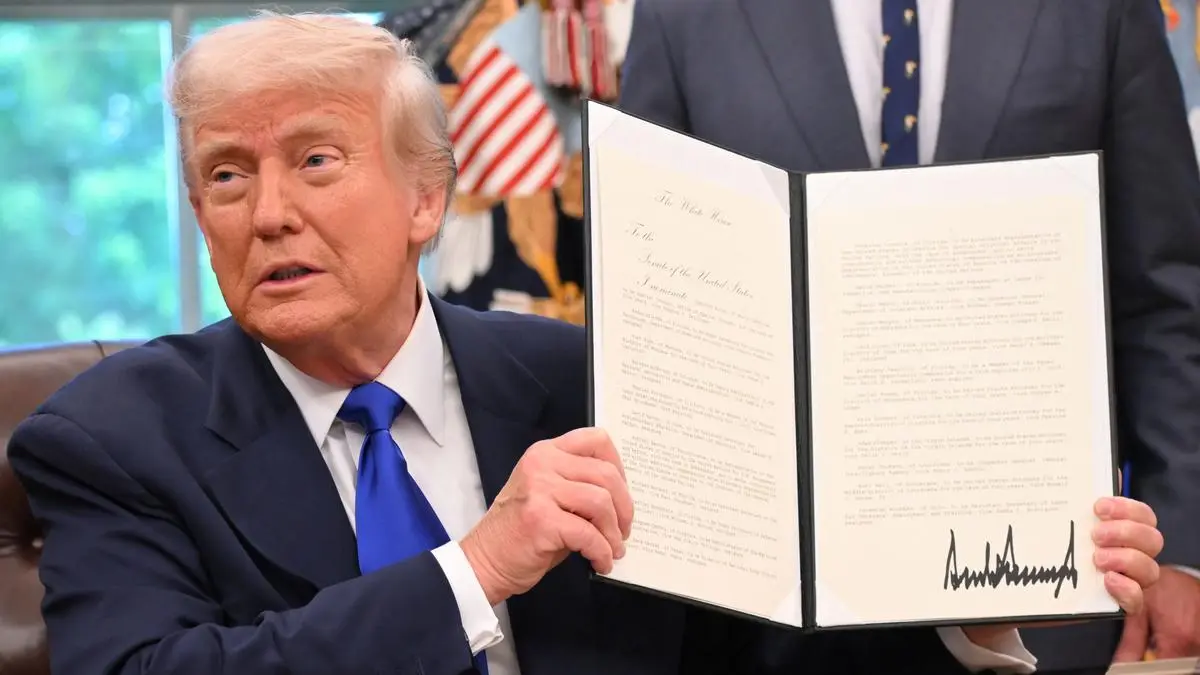
On May 5, 2025, President Donald Trump banned gain-of-function (GoF) research through an executive order, claiming it caused the COVID-19 pandemic via a lab leak in Wuhan. Trump’s order comes amid broader efforts by his administration to reshape American science and health policy, including mass firings to government scientists and steep slashes to research budgets. The order rejects Biden-era oversight policies and instructs the Office of Science and Technology Policy to create stricter regulations. This action revives debates about COVID-19’s origins and GoF research’s connection to the Wuhan Institute of Virology (WIV), which received US funding.
GoF research modifies pathogens to enhance traits like transmissibility or virulence, helping scientists study pandemic potential and develop countermeasures. While providing controlled environments for studying enhanced pathogens, GoF research remains controversial due to misuse risks that could trigger pandemics.
“There’s no laboratory that’s immune from leaks—and this is going to prevent inadvertent leaks from happening in the future and endangering humanity,” US Health Secretary Robert F. Kennedy Jr. wrote on X.
Contested origin
The COVID-19 pandemic, which emerged in Wuhan in late 2019, has generated two main hypotheses: one suggests natural zoonotic transmission from bats through an intermediate host at a Wuhan market; the other points to a WIV laboratory leak. The WIV received US funding through the National Institutes of Health (NIH) and EcoHealth Alliance for bat coronavirus research that critics classify as GoF work. Some virologists, including former Centers for Disease Control and Prevention Director, Robert Redfield, suspected a lab leak early, noting the virus’s distinctive features like the furin cleavage site (FCS) that enhances human cell infection. However, the 2020 paper “The Proximal Origin of SARS-CoV-2”, promoted by NIH officials including former director of the National Institute of Allergy and Infectious Diseases, Anthony Fauci, supported natural origin and minimised the lab-leak hypothesis.
Also Read | COVID not developed as biological weapon: U.S. intelligence report
Economist Jeffrey Sachs claims the US bears significant responsibility for the pandemic. As chair of The Lancet’s COVID-19 Commission (until he disbanded its origins task force over conflicts of interest), Sachs argues that US-funded GoF research conducted with the WIV may have created and accidentally released SARS-CoV-2. He cites EcoHealth Alliance’s 2018 “DEFUSE” proposal to Defense Advanced Research Projects Agency (DARPA), which included plans to insert FCS sequences into SARS-like viruses—sequences later found in SARS-CoV-2. Though DARPA rejected this proposal, Sachs suggests similar work proceeded with NIH funding. He calls for independent investigation of US institutions, arguing that NIH’s lack of transparency indicates a cover-up. Sachs notes that after 2001, the NIH became a biodefence research hub, channelling Defence Department funds into potentially risky experiments.
EcoHealth Alliance and NIH maintain their research did not constitute GoF because it involved bat coronaviruses not known to infect humans or cause significant harm. They argue this work was essential for understanding emerging threats and was conducted with proper oversight and public disclosure. Studies published in Science in 2022 support a market origin theory, citing multiple viral spillovers at Wuhan’s Huanan Seafood Market, though the intermediate host remains unidentified. Genomic analyses suggest SARS-CoV-2’s features, including the FCS, could have evolved naturally, and no evidence confirms the WIV possessed SARS-CoV-2 or a close progenitor before the outbreak. Critics of the lab-leak theory, including some House Select Subcommittee Democrats, argue it relies on circumstantial evidence without direct proof.
Trump has long championed the theory that SARS-CoV-2 leaked from the Wuhan Institute of Virology as a result of gain-of-function research—an alternative to the theory that the virus spilled over naturally from wild animals to humans at a seafood market in the same city. The US government website Covid.gov, which previously focused on promoting vaccine and testing information, is now devoted to highlighting arguments that favor the lab leak.

Laboratory Technician David Salazar analyses COVID-19 samples during the polymerase chain reaction (PCR) preparation process, at the Genview Diagnosis lab on August 13, 2021, in Houston, Texas.
| Photo Credit:
Brandon Bell/AFP
The debate, however, remains unresolved. US intelligence agencies are divided: the FBI and Department of Energy support a lab leak with low confidence, while the National Intelligence Council and others favour natural origin. China’s restricted access to WIV records and early samples complicates investigations. Trump’s executive order aligns with Republican efforts to halt GoF research and hold accountable those involved in US-funded Wuhan projects.
Pushing back against the lab leak claims, on April 30, China released a white paper on its COVID-19 pandemic response, asserting that the virus originated in the US. Without definitive evidence, COVID-19’s origins remain contentious, requiring greater transparency from both US and Chinese institutions to prevent future pandemics.
Balancing risk and research
Despite Trump’s US ban, global oversight remains inconsistent. Countries like China lack transparent regulatory frameworks, raising concerns about unchecked experiments. The World Health Organization calls for standardised global frameworks, but progress is slow, leaving potential for risky experiments in less-regulated regions.
GoF research serves both beneficial purposes (vaccine development) and potentially harmful ones (bioterrorism). Advanced technologies like CRISPR have lowered barriers to pathogen manipulation, increasing misuse risk. The COVID-19 pandemic eroded public trust in scientific institutions, with GoF research becoming highly controversial. It complicated efforts to communicate the benefits of GoF, such as its role in mRNA vaccine development, while anti-science sentiment drives support for complete bans.
Computational modelling and safer experimental approaches—studying attenuated viruses or using organ-on-chip technologies—offer alternatives to traditional GoF methods. While gaining traction in 2025, critics argue these approaches cannot yet fully replace GoF for understanding complex host-pathogen interactions.
AI and machine learning in virology also accelerate GoF research while introducing new dangers. These tools can predict viral mutations or design enhanced pathogens faster than traditional methods, potentially outpacing biosafety measures. Debates intensify over whether AI-driven GoF experiments require additional restrictions, especially after reports of minimally overseen AI use in private labs studying viral evolution.
Also Read | U.S.&China: Looming confrontation
In 2025, US-China tensions amplify fears of weaponised GoF knowledge, driving calls for stricter international controls. Trump’s ban disrupts U.S. virology research, redirecting NIH and NSF funds away from GoF-related projects. Combined with reduced US-China scientific collaboration, this hampers global pathogen monitoring. Researchers warn overly restrictive policies could weaken pandemic preparedness, as GoF studies previously informed rapid responses to outbreaks like MERS and H5N1. Some labs now seek private funding, raising concerns about unregulated private sector research.
Ethical debates persist, with critics arguing potential benefits do not justify existential risks. Groups like the Bulletin of the Atomic Scientists advocate for a global GoF moratorium, citing near-misses like the 2014 CDC anthrax exposure. Proponents stress GoF’s importance for anticipating mutations in viruses like H5N1, which is resurging in 2025 with increased human cases.
The debate pits precautionary principles against scientific advancement with no resolution in sight. Trump’s executive order underscores a growing mistrust in traditional scientific oversight and a shift toward precautionary governance, even as global coordination on biosafety lags behind. Whether GoF research represents a necessary tool for pandemic prevention or an unacceptable risk to global security, without transparent, enforceable international standards, the world remains vulnerable to both natural and man-made biological threats.
(With inputs from agencies)
