

UConn’s Institute for Collaboration on Health, Intervention, and Policy (InCHIP) is recognizing the recipients of its 2026 Faculty Excellence Awards.
These awards celebrate UConn and UConn Health faculty who are making important contributions to their field, providing impactful mentorship, meaningfully exploring racial and ethnic health disparities, and engaging with the community through research to improve health outcomes.
“InCHIP’s Excellence Awards honor the innovative work that principal investigators and faculty affiliates are conducting to advance their research fields and improve public health and well-being. Awardees have track records that align with InCHIP’s mission and values. Congratulations to our 2026 Excellence Award recipients,” says Tricia Leahey, director of InCHIP and professor in the Department of Allied Health Sciences.
The awardees will be recognized during InCHIP’s Fall 2026 annual meeting and in its annual report. They will also receive funds to support their research program.
The 2026 Excellence Award recipients include:
Excellence Award for Junior Faculty Research
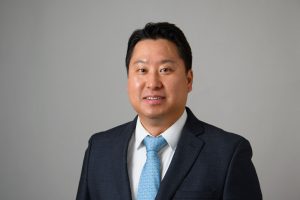
Oh Sung Kwon
Oh Sung Kwon is an assistant professor in the Department of Kinesiology in the College of Agriculture, Health, and Natural Resources (CAHNR). His research focuses on the mechanisms that drive aging-, metabolic-, and disease-related skeletal muscle and vascular dysfunction, as well as identifying strategies to improve health and physical function. Kwon’s work is broad and interdisciplinary in scope. He bridges mechanistic basic science with translational human physiology research to produce outcomes that can be applied in clinical contexts.
His research program has received national recognition and has been supported by the USDA, DoD, UConn, NIH, the Robert Lee Patterson Trust, and more. He leads the Integrative Physiology Lab, which studies vascular and skeletal muscle function in human and animal models, contributing insights into how mitochondrial dysfunction, oxidative stress, inflammation, and senescent cell accumulation influence impaired skeletal muscle and vascular function.
Kwon’s work has been published in journals such as Nature Communications, Journal of Physiology, Free Radical Biology and Medicine, Hypertension, and the Journal of Cachexia, Sarcopenia, and Muscle. He has had more than 30 peer-reviewed articles published since 2019 and has a current H-index of 26.
Excellence for Research on Racial and Ethnic Health Disparities and Health Outcomes of Racism
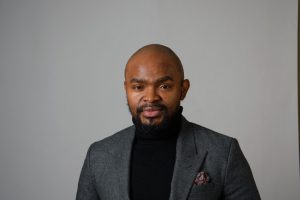
Candi Nwakasi
Candi Nwakasi is an assistant professor in the Department of Human Development and Family Sciences whose research focuses on how racism and systemic inequities impact health across the life span. His research agenda attempts to understand how social disadvantage affects functional decline, cognitive health, and cancer survivorship among historically marginalized groups, with a focus on Black adults and older adults in the U.S. He uses culturally grounded frameworks to evaluate how sociocultural contexts influence health behaviors and outcomes, underscoring the role of structural barriers, access to care, and culturally embedded coping strategies in health trajectories. By evaluating health through the lens of systemic disadvantage, Nwakasi reframes racial health disparities as products of structural inequities and not solely through individual or biological differences.
In addition to his impressive scholarship, Nwakasi is a committed mentor dedicated to developing an inclusive scientific workforce. He ensures graduate students have opportunities for publication as co-authors. He also serves on dissertation and thesis committees and co-leads an NIH-supported initiative aimed at recruiting and retaining scholars from historically Black colleges and universities in aging research.
Community-Engaged Health Research Excellence Award
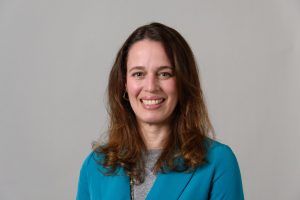
Cristina Colón-Semenza
Cristina Colón-Semenza is an assistant professor in the Department of Kinesiology who has a demonstrated track record of cultivating meaningful, long-term partnerships with community organizations. She is the founder and director of the Movement for Life Lab, which serves as a center for community-based research with implications for clinical and real-world settings to directly benefit people. Her lab focuses on physical activity, rehabilitation, and quality of life for individuals with neurodegenerative disease. Recently she has collaborated with partners that seek to advance the health of those living with Parkinson’s Disease. These include the American Parkinson Disease Association, Parkinson’s Foundation, Michael J. Fox Foundation, state-wide health initiatives, and community support groups.
In addition to her significant research contributions, Colón-Semenza prioritizes a two-way flow of knowledge, sharing her findings with the community, and co-developing research initiatives with community members and partners. She is also committed to building capacity within communities to ensure sustainable interventions.
Excellence in Faculty Mentoring Award
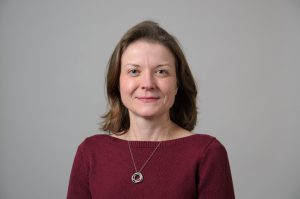
Natalie Shook
Natalie Shook is a professor of nursing and director of the Biobehavioral Research Lab (BBL). She is an experimental social psychologist whose research seeks to understand the psychosocial factors that influence mental and physical health and social attitudes. Shook’s work spans subjects including emotional well-being, mindfulness, vaccine hesitancy, health behavior, and social determinants of health. The BBL offers UConn faculty and students pathways to explore the nexus of biology and behavior. The NIH, NSF, HRSA, and UConn’s internal funding mechanisms have supported her research.
Shook has been praised for her mentorship of junior faculty and students in both personal and professional capacities to mold the next generation of health behavior and health equity researchers. She is genuinely invested in faculty and students’ success within and beyond academia. In the School of Nursing, Shook has assisted junior faculty in developing grants, designing studies, preparing manuscripts, navigating the tenure process, balancing competing demands, and becoming effective educators. She has been praised for her generosity and accessibility, taking a holistic approach to mentorship. She advocates for and models work-life integration to demonstrate realistic and sustainable academic careers. She has been recognized for her mentorship of students. In 2017, she earned the Faculty Award for Distinction in Mentoring of Undergraduates in Research and the Outstanding Service Award from the McNair Scholars Program.
