





When we examine the record of a government, beyond its impact on GDP, we must also ask whether it has nurtured the nobler impulses within society or stirred and legitimised the baser instincts that lie dormant in individuals and communities.
Every society harbours both tendencies. The desire to live with difference, the aspiration to civility—or at least its appearance—the impulse to extend a helping hand, generosity, magnanimity, forgiveness, tolerance, curiosity about those unlike ourselves, sympathy, and the ambition to enlarge one’s moral universe: all these exist, or can be nurtured, in any community.
But alongside them reside falsehood, deceit, malice, hatred, insularity, suspicion of the other, estrangement, and violence. Within every individual and every community, a measure of vulgarity and obscenity lurks. Ordinarily, there is a healthy hesitation to display it openly, for to do so risks being marked as uncultured. Every society possesses a capacity for refinement—a regard for nuanced language and a willingness to grapple with complexity rather than settle for superficiality. Yet pettiness, crudeness, and shallowness are equally present.
Alongside humility, a readiness to learn from others, and the capacity for self-criticism, there persist arrogance, a sense of civilisational superiority, and the affliction of imagining oneself all-knowing.
To view oneself as free, autonomous, and endowed with rights, and to demand that the state be accountable to the people, is the hallmark of a genuine democratic consciousness. Yet there exists an opposing, darker tendency: the urge to invest a single individual with almost divine powers and to surrender oneself to him, all the while believing that one is acting out of free will.
One way of judging the moral health of a society in any given era is to look closely at the leadership it chooses for itself. What is its ideal? What does that leadership do to its people? Does it view a crowd as a gathering of distinct individuals, each possessing an independent mind, or does it seek to dissolve the individual into a mindless, shouting collective? Does it regard itself as accountable to citizens, or does it aspire merely to convert citizens into a regime of unquestioning followers?
It is an old truth that the path taken by the great is eventually followed by the multitude. People want, in a very real sense, to shape themselves in the image of their leader. What, then, constitutes true leadership? One who frees people from fear, or one who governs by constantly manufacturing insecurities for them while claiming to be their protector? One who makes people independent, or one who renders them pathologically dependent? One who cultivates the courage and judgment to ask questions, or one who turns the act of questioning itself into a criminal offence?


BJP National General Secretary Radha Mohan Das Agrawal, Karnataka BJP President B.Y. Vijayendra and other party leaders during celebrations marking Prime Minister Narendra Modi becoming India’s longest-serving elected Prime Minister, in Bengaluru on Wednesday, June 10, 2026.
| Photo Credit:
PTI
The history of human societies reveals periods when noble impulses prevail in a nation, and other, darker intervals when baser instincts come to dominate both public and private life. This does not mean there is ever a utopian age in which goodness reigns unchallenged. What does happen is that there are moments when people generally aspire to be good—or at least wish to be seen as good. Goodness becomes an ideal to which society pays public homage.
Gandhi’s gift of fearlessness
In The Discovery of India, Jawaharlal Nehru reflected on the transformative leadership of Mahatma Gandhi. “The essence of his teaching”, Nehru wrote, “was fearlessness and truth; and action allied to these.” Nehru recalled the ancient dictum that the primary duty of leaders is to make the people fearless (abhaya)—not merely bodily courage but the absence of fear from the mind. When Gandhi emerged on the national stage, Indians were besieged by fear on every side: fear of the state, the landlord, the police, and the courts. Against this suffocating atmosphere rose Gandhi’s calm but resolute voice: “Be not afraid.”
It was as though Gandhi had suddenly lifted a heavy cloak of fear that was oppressing the people. With that liberation, Nehru suggested, Indians also moved away from falsehood, for fear and untruth are close companions. The Indian people did not undergo a miraculous, flawless transformation. Yet something vital shifted. Gandhi stood before them as a living symbol of truth, drawing them upward, urging them constantly toward a higher moral standard.
After Gandhi, the individual who perhaps exerted the deepest educational influence on Indians was Nehru himself. He painstakingly trained the country in the gruelling habits of parliamentary democracy. To be fearless and free is to be critical, not insolent. A democratic society creates space for disagreement. Critics are heard, not demonised. One does not seek to humiliate one’s opponent or turn them into an enemy.
The ethos of the Nehruvian era compelled figures as ideologically distinct as fiery socialists, revolutionary communists, and passionate Hindutva politicians to discipline their public conduct. Respect for criticism and a persistent willingness to doubt oneself were among the defining features of that period. Far from indicating weakness, such openness reflected supreme democratic confidence: the confidence to hear criticism, reflect upon it, and, when necessary, correct oneself.
Nehru regarded this as the finest part of Gandhi’s legacy. Whenever he was asked how a nation’s progress should be measured, he often replied that the ultimate yardstick lay in the quality of its people. Were they becoming better human beings? Were they more considerate of others? Were they curious? Did they take an interest in people and cultures different from their own, or were they becoming pathologically inward-looking?
The mirror of 12 years
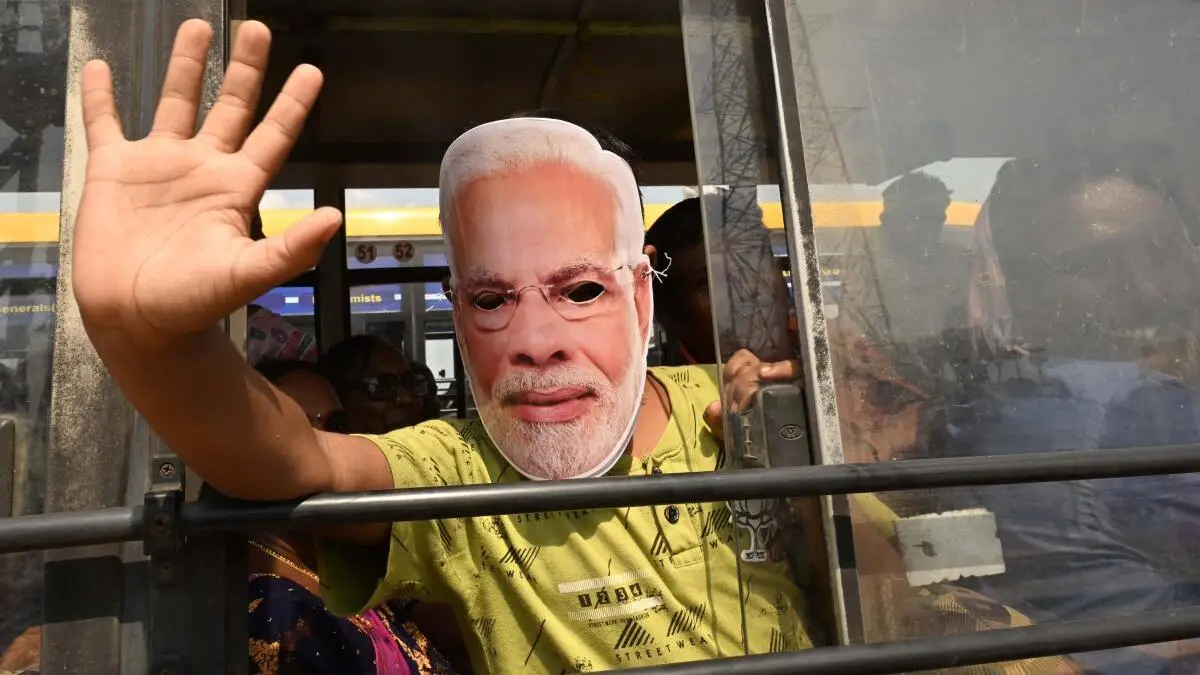
Today, much triumphalist celebration surrounds the fact that one individual has remained Prime Minister for 12 consecutive years. Yet what can be said about the moral quality of Indian society during these 12 years? Have fear, falsehood, deceit, manipulation, hatred, vulgarity, and sycophancy deepened their grip on our public life? Has society become more courageous—or has bullying replaced courage? Have foolishness, arrogance, and narcissism been elevated to state virtues?
Since India’s present Prime Minister, Narendra Modi, appears to take particular pride in being regarded as a leader of Hindus, another question becomes unavoidable. Has Hindu society, on average, become better or worse under his watch? Has it risen to a higher moral plane, or suffered a profound ethical decline? Is its leader challenging it to elevate itself, or dragging it downward to the level of his own narrow political instincts, into a swamp of coarseness and moral squalor? Does the wider world look upon this society with admiration, or with a quiet revulsion?
When Indian society gazes into the mirror of these 12 years, what kind of face does it see reflected there?
Apoorvanand teaches Hindi at Delhi University and writes literary and cultural criticism.
Also Read | The grotesque aspects of Hindu society today
Also Read | Will the BJP weather the Gen Z revolt?


