

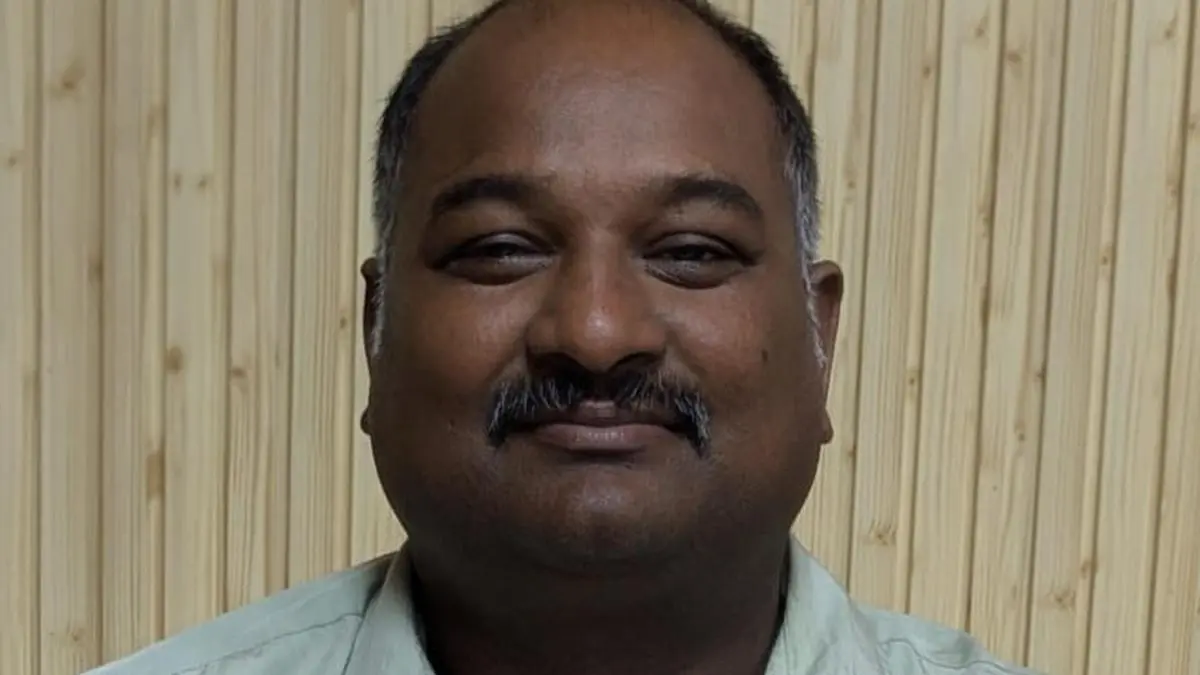
For 15 years, 44-year-old Abhishek Gupta had a stable career, a vision for his children’s future and a life filled with hope. That reality vanished on May 29, 2022, when a right-wing activist in Bareilly disrupted a Sunday morning prayer Gupta was attending. The activist filed a criminal case accusing Gupta of running a massive conversion racket by offering monetary allurements to poor and Dalit Hindus. Charged and arrested, Gupta’s entire life was shattered overnight.
Working at the time as a CT scan technician at the government-approved Rohilkhand Medical College in Bareilly, Gupta was fired from his job and immediately evicted from his two-room service apartment.
Left to face a gruelling legal battle with completely drained finances, he decided to uproot his family and relocate to his native village in Gorakhpur, around 600 km east.
Two years later, in July 2024, a Bareilly court honourably acquitted him of all charges of forced religious conversion. In a scathing judgment, the judge not only declared him innocent but also ordered strict action against several police officers who framed him “under some pressure”, on the basis of a “baseless, unfounded, fabricated, and fantastical” story.
Despite this resounding vindication, Gupta’s ordeal is far from over. He finds himself back in the crosshairs of the controversial law introduced by the Adityanath government in 2020. His prior acquittal in Bareilly is currently being challenged in a higher court. Worse still, barely had he recovered from his first ordeal, Gupta was recently arrested again under the exact same law in Gorakhpur—this time for attending a social dinner at the house of a Dalit family in his neighbourhood in Chauri Chaura. He ended up spending a month in jail before being released on bail. Just like the first time, the First Information Report was lodged on the complaint of a vigilante right-wing activist.
Trapped under a legal sword of Damocles and forced to fight two battles simultaneously, Gupta is distraught. “If I was not strong, I would have killed myself,” Gupta confessed to Frontline.
A second accusation
Gupta’s latest nightmare began on January 9 this year around 7 pm in Mahadeva Adai village in Gorakhpur. Sanjay Bharti, a Dalit man, had organised a traditional ritual feast called barhai to celebrate the birth of his granddaughter. He invited local Dalits, Yadavs, and members of a nearby Christian church campus, including a pastor. Gupta was among the guests.
Gupta recalls that he was eating rasgullas when a group of Bajrang Dal activists barged into Bharti’s premises, which happened to be located close to a church. The activists allegedly manhandled and assaulted the guests, accusing them of attempting to convert Hindus to Christianity.
“The Bajrang Dal people started assaulting us, shouting ‘Yehi hain, yehi hain!’ [It’s them, it’s them!]. Then the police came, hauled us into vehicles, and took us to the station even before we could process anything or ask questions,” Gupta said.
An FIR was promptly lodged at the Chauri Chaura police station against Gupta and four others, including a pastor, under Sections 3 and 5(1) of the Uttar Pradesh Prohibition of Unlawful Conversion of Religion Act, 2021. They were also booked for rioting and criminal intimidation.
With his life drastically upended by the criminal case in Bareilly, Gupta had hoped to lie low and rebuild his life around familiar surroundings in Gorakhpur. But the same nightmare tracked him home, bringing with it severe mental stress, intense social ostracisation and the financial burden of fighting another legal case. Today, he is even afraid to walk down the street to eat at someone’s house or socialise. “Because of these wild allegations, am I supposed to stop going out, or avoid eating at other people’s homes if they are Hindus, out of fear it will be labelled as a conversion attempt?” Gupta asked. “People say nasty things to us, and society has stopped accepting us. I feel completely helpless.”
Bajrang Dal’s Gorakhpur city president, Amit Verma, who lodged the police complaint, alleged that Gupta and others were attempting to induce the religious conversion of local Dalits through the promise of jobs, preaching about Christian “miracles” and the power to cure diseases, and other financial allurements.
Verma told Frontline that when he reached the spot on January 9, following a tip-off by a fellow karyakarta [worker], he saw some Christian men holding Bibles in their hands, promising to cure illnesses and provide local Dalit Hindus with financial help. “Before entering the premises, I removed my chandan tika [sandalwood mark on forehead] to blend in,” said Verma, adding that when he was trying to record a video, someone recognised him and alerted others. A person carrying the Bible started fleeing from the spot, Verma said. He also alleged that when he objected to their “conversion” activities, they got aggressive and threatened to kill him.
Gupta, however, flatly rejected the allegations, noting that it was a purely social event—a ritual celebration and feast on the 12th day (barhai) of the child’s birth. It just happened that some local Christians, including a pastor, were invited.
“Conversion happens through a formal ritual in the church and not randomly at someone’s house,” said Gupta. Though born a Hindu and never legally converted to Christianity or adopted a Christian name, Gupta has been regularly attending prayer meetings for Jesus Christ since 2004. He is, for all practical purposes, a “Christian”. He also preaches about the life and teachings of Christ. This fluid and complicated socio-religious identity is not uncommon in these parts of the country, where personal consciousness goes beyond rigid legal definitions.
In February, a court in Gorakhpur granted bail to Gupta and four others. While granting them relief, additional sessions judge Umesh Chandra Pandey noted that “eyewitnesses” mentioned in the case diary and a group of local women, including the host Basmati, had submitted written statements stating that no programme related to religious conversion was taking place at the house. The case diary also showed that the sole piece of incriminating material recovered from the house by the police was a copy of the Bible.
Himanshu Patel, the district president of the Hindu Jagran Manch, who filed a criminal complaint against Gupta and eight unidentified others in 2022, had alleged that they were running a massive “conversion project” in Bichpuri village. The FIR accused Gupta of holding a prayer meeting at one Mamata’s house and converting around 40 Hindus assembled there through monetary allurements.
Patel also claimed that copies of the Bible were recovered from the site. Gupta says that local media sensationalised the unverified claims and even planted fabricated stories of him allegedly converting people through monetary inducements ranging up to Rs.5 lakh. “The media holds us guilty much before a judgment is passed by a court. That’s the difficult part. They don’t even understand the permanent damage it causes us,” Gupta said.

Gupta says that local media sensationalised the unverified claims and even planted fabricated stories of him allegedly converting people through monetary inducements ranging up to Rs.5 lakh
| Photo Credit:
By Special Arrangment
The criminal case not only destroyed his career but also dashed his dreams of providing a good quality education to his son and daughter, now aged 8 and 11. The two children now study in a school near his village, as the family was forced to cut down on expenses. Gupta is also unable to repay his loans on time. And after four years, he has yet to find suitable work. The household survives solely on his wife’s modest income from her job at a local nursing home.
The Bareilly case collapsed entirely on July 30, 2024, when an additional sessions court in the district declared Gupta and his co-accused, Kundan Lal, innocent and the entire case a malicious fabrication. As importantly, judge Gyanendra Tripathi also condemned the police and directed the Bareilly police chief to take “appropriate legal action” against the then station house officer, two case investigating officers, and the circle officer for lodging the FIR. The judge also ruled—correctly, as per the law at the time—that Patel did not have any legal authority to get an FIR lodged in the matter since he was neither a victim nor a relative of a victim.
Talking to Frontline, Patel confirmed that he had filed an appeal against Gupta’s acquittal in the Allahabad High Court, where the matter is pending.
Patel explained that he challenged Gupta’s acquittal because he wanted to protect his credibility and that of his larger cause against dharam parivartan [religious conversion].
“It would appear like we were proven wrong [by the acquittal],” he said. “While in fact, we were right and we have evidence to show that conversion was going on. What can we do if the police carried out a faulty investigation,” he said.
How the law changed
Uttar Pradesh’s original law against unlawful conversion made religious conversions a cognizable and non-bailable offence, inviting penalties of up to 10 years in prison if found to be effected for marriage or through misrepresentation, force, undue influence, coercion, allurement, or other allegedly fraudulent means.
The law clearly defined and limited who was qualified to lodge an FIR against unlawful conversion: “any aggrieved person, his or her parents, brother, sister or any other person related to him or her by blood, marriage or adoption.”
However, in practice, this provision was rarely implemented by the book, according to reports, allowing third-party elements, especially right-wing activists aligned to the ideology of the ruling dispensation, the room to legally intervene and become complainants. Police officers also routinely used their discretion to lodge FIRs suo motu or after being alerted by right-wing elements.
Amid a growing backlash from the courts over these unauthorised third-party FIRs, the Adityanath government in July 2024 amended the law, effectively curing the legal restriction that previously blocked third-party elements by explicitly allowing “any person” to file a complaint.
Critics argue that the amendment has made it easier for third parties, including Hindutva activists, to initiate anti-conversion proceedings.
While Verma claims that he had no clue about Gupta’s past or the Bareilly case, he notes that his colleagues were well aware that Gupta was preaching Christianity. The Bajrang Dal activist defends his vigilantism as a social duty. “We are volunteers. It is our duty to bring such incidents to the notice of the police,” he said. “Conversions pose a danger to society, cause demographic shifts, spread superstition, and foster social discord. Look at what happened in Tamil Nadu—a community with just 5 per cent population got its chief minister.”
Despite the court’s censure in the Bareilly case, Patel, too, remained unapologetic. “As a complainant and a citizen, my job was to simply report it to the police. It is the responsibility of the police to verify and investigate the allegations,” he said.
Abhishek Gupta views things differently, accusing the Adityanath government of enabling vigilante elements. “The government has given them the freedom to engage in hooliganism,” he said ruefully.
In the Bareilly case, the prosecution produced eight witnesses—the complainant Patel, his three associates, three policemen, and a medical officer. There was not a single independent witness or victim of unlawful conversion.
In the bail proceedings of all five accused in the Gorakhpur case, including Gupta, the government counsel opposed the bail arguing that Gupta and his co-accused misled “gullible members of society” to induce them to undergo religious conversion. However, testimonies submitted by eyewitnesses, at this stage, showed there was no credible information of religious conversion happening.
Gupta’s two cases illustrate how the anti-conversion law has been invoked following complaints by right-wing activists who alleged that Christian prayer meetings and social gatherings were being used to induce religious conversions among Hindus, including Dalits.
The Gorakhpur case against Gupta features no actual victims of conversion and mirrors the discredited Bareilly case in its narrative. On several instances since 2020, the Allahabad High Court has clarified that distributing Bibles or preaching religion does not amount to an offence under the unlawful conversions law. Yet such cases continue to be lodged rampantly.
Since the law against unlawful conversion came into force in UP, only a handful of cases have culminated in convictions. From November 2020 to July 2024, only four out of 835 FIRs resulted in convictions, according to police quoted in a report by The Times of India.
Given the trend, the fresh charges against Gupta are unlikely to withstand legal scrutiny and could collapse like the Bareilly case. However, even if the fresh case eventually ends in acquittal, Gupta faces the immediate burden of legal costs, repeated court appearances, social stigma and years of uncertainty.
Omar Rashid is a journalist covering politics, caste and identity, justice, and law and order.
Also Read | Laws, lies, and the conversion debate
Also Read | Rewarding reconversion?
