





It is not every day that the US President commends a foreign leader for winning a provincial election. So it was a surprise when the White House spokesman conveyed Donald Trump’s congratulatory message to Prime Minister Narendra Modi on his “historic and decisive election victory” in West Bengal this month. But this was no ordinary election. Modi had just conquered a State where even a decade ago his party had only a negligible presence.
The BJP now controls 22 of the country’s 28 States, accounting for 73 per cent of the total geographical area and 78 per cent of its 145-crore population, making India a one-party state for all practical purposes. Much of this is credited to Modi, whose helmsmanship has transformed the BJP from a north-centric force into a near pan-India juggernaut, now including even Bengal, whose syncretic culture was so far considered antithetical to the BJP’s politics of Hindu supremacism.
A preening Modi, symbolically clad in traditional Bengali attire, addressed party workers after the election results. In his nearly hour-long speech, he spoke of the record turnout and how the BJP victory in Bengal was a high point for India’s democracy and Constitution.
Nothing could be further from the truth.
Watershed moment, for wrong reasons
It was a watershed moment for Indian democracy all right, but for all the wrong reasons. The Bengal election heralds the arrival of a Russia-style managed democracy, where elections can be made to order for the ruler, enabled by an all-round capitulation of democratic institutions.
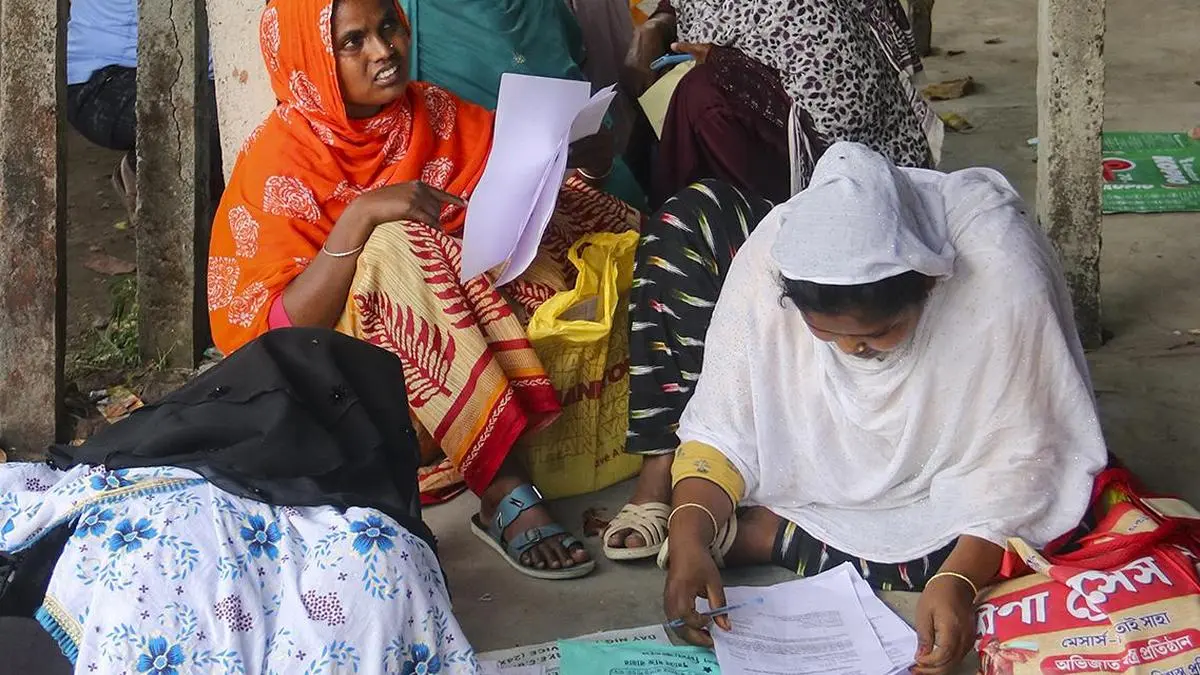
The Election Commission of India’s (ECI) Special Intensive Revision (SIR) in Bengal removed some 91 lakh names from the rolls. Of these, nearly 60 lakh were marked as absentee or deceased voters, while the cases of more than 34 lakh voters remained unresolved, including 27 lakh ousted through “logical discrepancies” invoked only in Bengal.
Deletions were disproportionately high among Muslims and women, two of former Chief Minister Mamata Banerjee’s biggest support blocs. Despite submitting all documents, 34 lakh people had to sit the election out because the apex court reasoned that there was no time left to complete their verification, and it was fine if they did not vote. Ordinarily, an election that excludes millions of people because the authorities could not complete verifications on time should carry no popular legitimacy. But these are extraordinary times in India.
Against the backdrop of the Trinamool’s corruption and thuggery and the triumph of the BJP’s anti-Muslim propaganda, the Bengal result is being celebrated as the triumph of democracy. The captured mainstream media’s enthusiastic coverage suggests that nothing is amiss. While the anti-incumbency anger against the Trinamool is real, overlooking the impact of the massive exclusions betrays a suspension of common sense at best and intellectual dishonesty at worst.

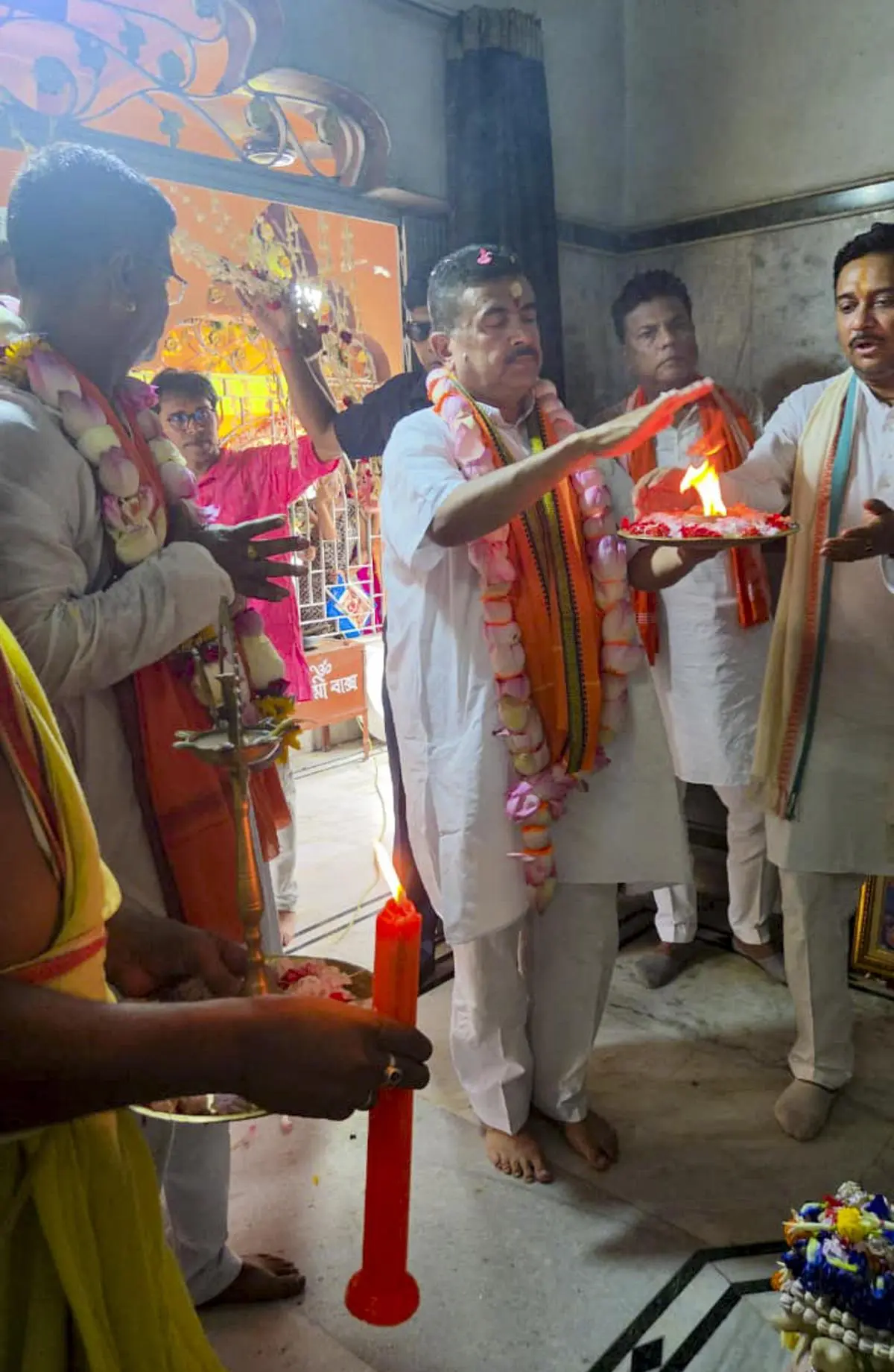
In this image received on May 19, 2026, Chief Minister Suvendu Adhikari offers prayers at a temple during a roadshow in support of the BJP candidate for the Falta constituency, in South 24 Parganas district.
| Photo Credit:
PTI
In the decade under Modi, concentration of power, erosion of civil liberties and minority rights, suppression of dissent, and the creeping capture of institutions have incrementally undermined democracy, as have the government’s control over media and the crores of rupees of dark money in politics. These pathologies have defined Modi’s rule as much as that of smaller despots like Mamata Banerjee. But through it all, at least the electoral process itself was still largely considered fair. Bengal 2026 shows that it is not anymore.
Pattern of deletions
The deletions show a clear pattern, with the highest carried out in Trinamool bastions. According to one study, in 150 seats (more than half the total of 294 seats), the total deletions were greater than victory margins, and the BJP won 100 while the Trinamool won 48. In the last State election of 2021, the BJP won just 19 of these and the Trinamool 131. A similar study based on data compiled by Kolkata-based Sabar Institute found that in 105 seats, the BJP won by fewer votes than the number purged from the rolls. In 86 of these seats, the BJP had never won before.
Besides the deletions, there were other measures such as the quiet addition of nearly 7,00,000 new voters just before the election, and the exclusion of 5,50,000 people based purely on crowdsourced complaints, a questionable provision strategically used for targeted mass disenfranchisement of Muslims.
Disproportionately burdening marginalised groups, Bengal’s SIR was railroaded without political consensus or legal affirmation, without a transparent and rule-bound procedure, and with constantly shifting goalposts. Opacity marked its every step. The ECI’s public data was deliberately unstructured and made difficult to study. And even this deeply flawed process was not completed on time. And if that was not enough, details are now emerging of how counting was deliberately slowed in seats where the Trinamool was leading, its polling agents forced out of counting stations and extra rounds of counting added to change the final tally.
An election with voters and results thus manufactured puts India in the territory of a managed democracy, a hybrid regime where elections exist to lend legitimacy through procedural ritual even as substantive power remains centralised and genuine political choice is severely constricted.
Crumbs of power are still available for the opposition to maintain the façade of democracy—a State here, a seat there—but if the despot wants to win an election, he will. If he can choose voters before voters get to choose him, there is nothing to stop him.
Capture of institutions
To get here, the capture of governing institutions has been central. Federal investigative and regulatory agencies have been reduced to appendages of the governing party; now the ECI is a member of this club. A formally autonomous constitutional authority with a long history of august conduct, the three commissioners of the present commission were all installed before the Lok Sabha election of 2024 under a cloud of allegations about procedural impropriety. It has been all the way downhill since.
Chief Election Commissioner Gyanesh Kumar introduced the SIR in 2025, with its tight schedules and onerous documentary obligations. Across 13 States and Union Territories in the past year, some 52 million names, more than the population of Spain, have been removed from the rolls. In net terms, some 72 lakh were deleted and 20 lakh added. Uttar Pradesh saw some 200 lakh net deletions while Gujarat saw 68 lakh. But common across States were reports of targeted deletions of Muslims. A government teacher working as an enumerator in Rajasthan reportedly threatened to commit suicide owing to the “pressure” to “delete Muslim votes”. Some 31 lakh names were deleted in that State.
But nowhere has the SIR’s excesses been as glaring as in Bengal. Of the 91 lakh deletions (from 760 lakh voters), the treatment of 34 lakh voters stood out. They submitted documents supporting their claim to vote, but were not heard by the designated tribunals, which had neither the time nor the inclination. Four days before the election, the 19 tribunals had heard one case.
Bengal is the only State where a special provision of adjudication by quasi-judicial tribunals was introduced for an additional layer of verification using an opaque AI-driven process to detect “logical discrepancies” in documents. This placed over 60 lakh people in a special category of doubtful voters “under adjudication”, who would be on the rolls but not eligible to vote. “Logical discrepancy” is supposedly detected by a neutral algorithm triggered by inconsistencies in name spellings or variations in kin names, but the exclusions have been disproportionately of Muslims and women.
Women account for more than half of the removed names; Dalit Hindus also suffered heavy deletions, but Muslims were hit the hardest. Districts with higher Muslim populations saw higher numbers of people under the doubtful category. Nine of the 10 districts with the highest number of voters under adjudication are Muslim-majority. In some constituencies, more than 90 per cent of those placed under adjudication are Muslims.


Trinamool leader Mamata Banerjee leads a protest rally against the SIR process, in Kolkata on November 4, 2025.
| Photo Credit:
Manvender Vashist Lav
Of the 27 lakh voters excluded through adjudication, some 65 per cent are Muslims. Overall, Muslims account for 34 per cent of the total deletions, even though they account for 27 per cent of Bengal’s population. Hindus account for 63 per cent of the deletions although they are 72 per cent of the population.
Districts that saw the highest number of voter deletions were mostly Trinamool strongholds. In Mamata Banerjee’s home constituency, Muslims constitute 20 per cent of the population but made up 40 per cent of deleted voters.
The SIR’s political messaging was clear from the start: to remove “Bangladeshi infiltrators”. No election is now fought without the dog whistle of “Bangladeshi infiltrators” who have supposedly populated the voter rolls to such an extent that they threaten the country. Top BJP leaders work campaign crowds with rousing stump speeches promising to rid the nation of such infiltrators.
The ECI started the nationwide SIR in Bihar last year with this claim. Yet, after removing 47 lakh voters, it declared that it had no data on the number of illegal foreigners. Independent researchers and journalists mining ECI data found barely 0.012 per cent “foreigners”, most of them Nepali women married to Indian men.
Yet, the idea of “Bangladeshi infiltrators” has only gained resonance thanks to the BJP’s propaganda and a servile media that pushes the narrative. The BJP points to Bengal’s 27 per cent Muslim population (up from about 20 per cent at independence) as proof of an “Islamic conspiracy” to alter India’s demographics. “Detect, delete, and deport” was the BJP’s campaign catchphrase in the Bengal election. And it explains why a vast majority of Hindu voters welcomed the SIR, overlooking the manifest unfairness of it.
If the ECI enabled what unfolded in Bengal, a significant role was also played by the Supreme Court, once among the country’s most respected institutions but increasingly seen as the government’s handmaiden. It has deliberately refused to address core Constitutional arguments against the SIR, instead focussing on the process alone.
With just days to go before the Bengal election and the fate of millions of voters hanging in balance, the Bengal government pleaded with the court to set a deadline for tribunal hearings. The two-judge Bench said: “We do not want to rush it.” Finally, in what must be one of history’s most cavalier judicial pronouncements, the apex court said that for those who cannot vote in this election, there is always the next time.
Still, the opposition’s only resistance to the SIR has been to approach the same court again and again. Mamata Banerjee repeatedly proclaimed that she would never allow the SIR in Bengal but quickly fell in line when it was announced, even while staging protest marches and fighting it in court. Neither Mamata nor opposition leaders entertained the idea of a mass movement against a process they themselves claim is designed to steal elections.
Integrity of elections
Even before Bengal, questions about the integrity of recent elections have abounded. In Maharashtra, 41 lakh new voters were mysteriously added in the five months between the national and State elections.
In Odisha, vote tallies from the provincial and parliamentary elections do not match, and the ECI does not care to explain the anomaly. In the 2020 Bihar election, the BJP alliance beat the opposition by a thin margin of 0.03 per cent, or just 12,768 votes. In 2025, after the SIR, which removed 68 lakh voters and added 21 lakh new ones, the BJP alliance won with a 10 per cent margin.
If the SIR is indeed an egregious escalation in gaming elections and the opposition feels compelled to play along because the cost of staying out far outweighs the benefits of staying in, India is already living in a managed democracy.
These are the kind of calculations that the opposition in tenuous democracies such as like Zimbabwe and Venezuela have had to make. That the governing institutions in India have become so skewed that the opposition calls elections stolen yet can do nothing about it, puts us also in the twilight zone of undead democracies.
It can be argued that voter deletions alone do not explain the results. In Bihar, the opposition may not have inspired voters.
In Bengal, the defeated party may have faced a mountain of resentment. We will never know for sure, because it has become impossible to determine who, why, and how people are voting. Popular will is now subordinate to the ruler’s will. From being the “greatest show on earth”, Indian elections have been reduced to the despot’s sideshow.
The elements of a Russia-style managed democracy have been lining up for a while in Modi’s India: a strong executive that can override countervailing institutions; a supine judiciary; a personality cult glorifying the leader; an emerging security state wedded to the ruler’s identitarian project; Big Business aligned firmly with the ruler (last year, the BJP got 10 times more corporate donations than all other national parties put together); and a toadying media. Now, with managed elections, the despot has finally got all his ducks in a row.
Adapted from a longer essay first published by Toda Peace Institute.
Debasish Roy Chowdhury is co-author of To Kill a Democracy: India’s Passage to Despotism.
Also Read | Why the BJP’s big win in West Bengal is not a surprise
Also Read | The satrap falls


