





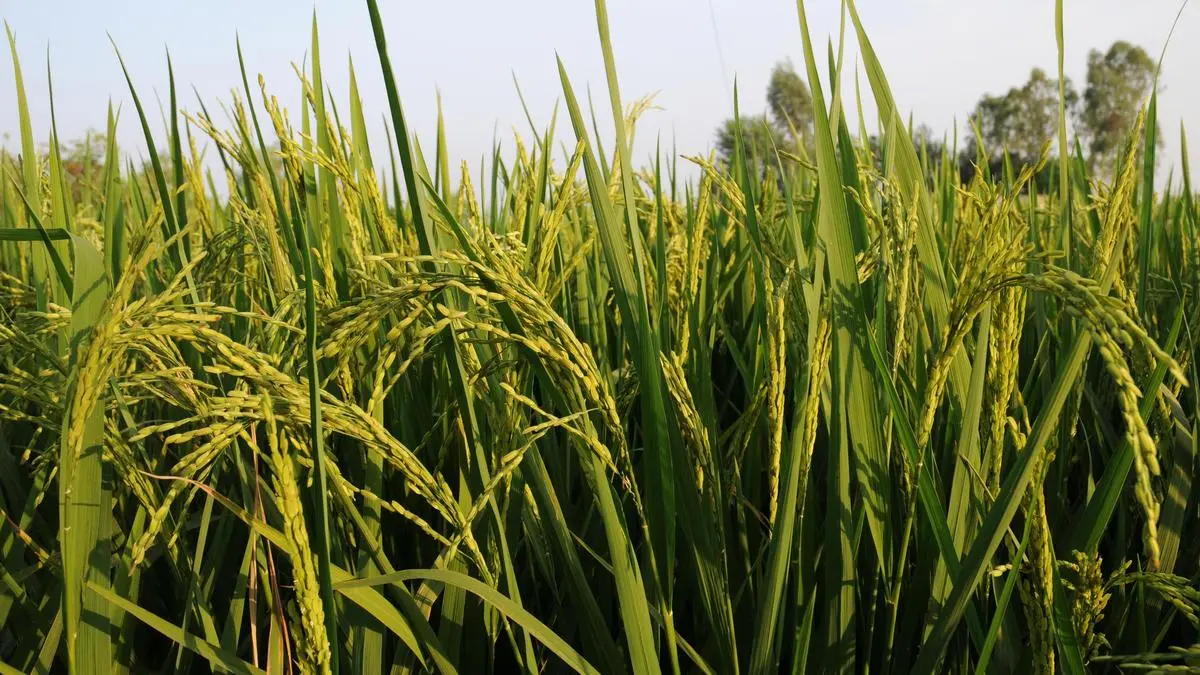
More than half the world’s population eats rice every day. For many communities across South and South-East Asia, it supplies nearly half their daily calories. But in a broad swathe of the Gangetic plains—from eastern Uttar Pradesh to West Bengal—this staple is carrying something it should not: arsenic.
Arsenic is a naturally occurring element found in soil and rocks. It is colourless, odourless, and tasteless. It does not announce itself. Over decades, prolonged exposure causes cancers of the skin, lung, bladder, and liver, as well as cardiovascular and neurological disease. The problem with paddy cultivation is structural: waterlogged fields release arsenic bound in soil, making it soluble and available to plant roots. Rice absorbs more arsenic from irrigation water than almost any other cereal crop.
The contamination is not new. What is changing is its scale—and the pace at which it is worsening. Research from Banaras Hindu University (BHU) and collaborating institutions now confirms that arsenic is no longer confined to soil and groundwater. It has entered the food chain.
Scientists at the Institute of Environment and Sustainable Development (IESD), BHU, have been studying arsenic accumulation in rice-producing regions of eastern India since 2015. Soil and water testing in Ghazipur district, Uttar Pradesh, recorded arsenic levels of approximately 17.3 milligrams per kilogram; in Jaunpur, 16.5 milligrams per kilogram—figures from a study currently under review for publication in Plant Cell Reports (Springer Nature). Both exceed thresholds considered safe by international standards.
Environmental scientist Sudhakar Srivastava of BHU said that in several districts of eastern Uttar Pradesh—including Ballia, Ghazipur, Varanasi, and Prayagraj—arsenic levels in soil have reached 20 to 30 micrograms per kilogram, adding that China treats anything above 10 micrograms per kilogram as a danger indicator.
The first detailed field investigation was conducted in 2015 in Sarapur village, Nadia district, West Bengal, where high arsenic was found in groundwater, soil, and rice samples. The scientists subsequently expanded their study across the region.
The research team—including Srivastava, Sutapa Bose (then a Ramanujan Fellow in the Department of Earth Sciences, IISER Kolkata), Munish Kumar Upadhyay (then at IESD BHU, now at the Council on Energy, Environment and Water, New Delhi), Arnab Majumdar (then at IISER Kolkata, now a Marie Curie Postdoctoral Fellow at Imperial College London), and Anil Barla—selected Sarapur village in the Chakdaha block of Nadia district for experiments in 2016 and 2017. Fields were divided by arsenic levels: one low-contamination plot and two high-contamination plots. All were irrigated with groundwater, the primary arsenic vector in the region.
The scientists found that arsenic accumulates most heavily in paddy plants during the grain-filling stage, when plants absorb maximum nutrients from soil and water. Certain arsenic compounds in the soil—carbonate-bound and exchangeable forms—are readily absorbed by plants; others remain comparatively stable.
Tests on rice varieties Gosai and Satabdi grown in West Bengal recorded arsenic concentrations of up to 950 micrograms per kilogram—nearly five times the Codex Alimentarius limit of 200 micrograms per kilogram set jointly by the Food and Agriculture Organization and the World Health Organization (WHO). In eastern Uttar Pradesh, testing in Shekhpur village, Ghazipur district, between 2020 and 2022 found arsenic levels of 100 and 200 micrograms per kilogram in the Samba Mahsuri and Kaveri Chintu (locally known as Chintu Ziya) varieties respectively. Below the danger threshold for now, but rising.
Sutapa Bose said arsenic levels across the Gangetic plains are high in almost all varieties of paddy grown there, adding that the contamination is no longer limited to soil or water but is reaching people’s plates through rice and vegetables.
Two interventions
BHU scientists have proposed two practical measures. The first involves treating paddy plants with thiourea, a sulphur-containing compound. The second is a modified transplantation method known locally as the “Sanda technique” or double transplantation.
When paddy plants are exposed to arsenic, they produce reactive oxygen species (ROS)—unstable molecules that damage plant cells and disrupt normal functioning. Thiourea acts as an antioxidant, neutralising these molecules and creating conditions in which arsenic uptake through roots is reduced and its upward movement within the plant is slowed.
Across two separate field studies, thiourea reduced grain arsenic in Gosai and Satabdi by 9.5 per cent and 19.8 per cent, respectively, in one study, and by 10.3 per cent to 27.5 per cent in another conducted under different field conditions—both published by Upadhyay and colleagues. The effect held consistently across multiple seasons. Thiourea also appears to work by elevating levels of glutathione, a compound that binds arsenic within plant cells and limits its movement toward the grain. Health risk indicators fell by an estimated 12 to 18 per cent, and paddy yield increased between 10 and 40 per cent in treated plots.
A related study—led by Srivastava, with contributions from Nidhi Tyagi, Ankita Gupta, Kritika Sinha, Shraddha Singh, and Mohammad Mahmoodur Rahman—examined double transplantation. In conventional paddy cultivation, seedlings are raised in a nursery and transplanted once into the field. Under the Sanda method, seedlings are transplanted densely into a second nursery before being replanted in the main field. The additional step produces stronger root systems and more balanced plant growth.
Double transplantation is not new to the subcontinent. Upadhyay noted that it is a centuries-old indigenous practice known by different names across regions—“Ballan system” in Assam, “Changini Geni” in Meghalaya, “Kharonha” in Bihar, “Kalam” or “Sanda” in eastern Uttar Pradesh, and “Balon system” in Bangladesh.
The researchers found that plants grown under double transplantation had higher chlorophyll and carotenoid levels, indicating stronger photosynthetic capacity. More significantly, the structure of plant cell walls changed: increased pectin made the walls more resistant to arsenic entry, and plants appeared to sequester more arsenic in their roots rather than translocating it upward.
At the molecular level, reduced activity of genes involved in cellulose formation (CESA-4 and CESA-7) was observed in the Samba Mahsuri variety—a change scientists interpreted as the plant redirecting energy toward protective processes. In terms of measurable outcomes, arsenic levels in roots fell by more than 20 per cent and in stems by 30 to 40 per cent in Samba Mahsuri; in Kaveri Chintu, reductions of 15 to 25 per cent were recorded. The amount of the more toxic inorganic arsenic (As III and As V) declined, while less harmful organic forms increased slightly. The research received support from the Nuclear Agriculture and Biotechnology Division of the Bhabha Atomic Research Centre and the Global Centre for Environmental Remediation at the University of Newcastle.
Upadhyay said the solution to the arsenic problem cannot be addressed only at the consumer level. Changes in agricultural practice are needed: periodic drying of paddy fields rather than continuous flooding, improvements in fertiliser use, and better soil management. Research into low-arsenic rice varieties is ongoing. Large-scale implementation, he said, requires robust scientific evidence and policy support.
A crisis across the plains
The problem extends well beyond the laboratory. A study by Chander Kumar Singh and researcher Sonal Bindal at the TERI School of Advanced Studies, New Delhi, titled “Predicting groundwater arsenic contamination: Regions at risk in highest populated state of India”, found that several districts of Uttar Pradesh are affected by arsenic in groundwater. The most severely contaminated include Ballia, Gorakhpur, Ghazipur, Barabanki, Gonda, Faizabad, and Lakhimpur Kheri. Moderate contamination was found in Chandauli, Varanasi, Shahjahanpur, Unnao, Pratapgarh, Kushinagar, Mau, Balrampur, Deoria, and Siddharthnagar. Contamination is particularly acute in the plains of the Ganga, Rapti, and Ghaghara rivers.
Approximately 78 per cent of Uttar Pradesh’s population lives in rural areas and depends largely on groundwater, Singh noted. Urban residents have access to piped supply; rural communities still draw from hand pumps and open wells. The same arsenic-laced water used for drinking also irrigates crops, allowing contamination to move from water into food and back into the body.


A girl carrying water buckets crosses a dried well on May 21, 2025, in Mauganj, Madhya Pradesh, India. Large parts of North India, including regions in Uttar Pradesh, Haryana, Punjab, and parts of Bihar depend largely on groundwater.
| Photo Credit:
Ritesh Shukla/Getty Images
Activist and co-founder of People’s Vigilance Committee on Human Rights, Lenin Raghuvanshi, pointed out that Bihar has become a major centre of the crisis but receives little attention in policy or media. In many districts along the Ganga in Bihar, arsenic levels in both groundwater and soil are dangerously high. Environmental scientists have repeatedly warned that without effective strategies, the eastern Gangetic-Brahmaputra plains could face a large-scale public health emergency.
Professor B.D. Tripathi, Chairman of the Ganga Research Centre at BHU, noted that about 140 million people worldwide drink water containing arsenic above the WHO’s guideline value of 10 micrograms per litre. The more alarming issue, he said, is that even where water is relatively safe, rice has become a major arsenic source. Inorganic arsenic in rice grains is increasing alongside rising temperatures and higher atmospheric carbon dioxide concentrations. In waterlogged paddy fields, reduced oxygen levels activate anaerobic microorganisms that mobilise arsenic into soluble forms; higher temperatures and greater carbon availability accelerate this process.
Professor Pradeep Kumar Mishra of IIT BHU’s Department of Chemical Engineering identified declining groundwater levels as a key driver: as water tables fall, arsenic concentrations in remaining water rise. Fishing communities and marginalised groups living along the Ganga are among the most exposed, relying on the same contaminated water for drinking, irrigation, and daily use. He called for government collaboration with non-governmental organisations to install water treatment plants, and for concrete steps to reduce arsenic in paddy crops.
Raghuvanshi questioned the effectiveness of oversight. While the Codex Alimentarius standard of 0.2 milligrams per kilogram of inorganic arsenic in polished rice exists, the guidelines of the Food Safety and Standards Authority of India are not being enforced with any rigour, he said, and the monitoring system is close to inactive. Rice from eastern India enters the national food supply through the Public Distribution System, meaning arsenic-contaminated grain potentially reaches states and populations considered far from the affected zone. This, he said, is not only a question of food availability but of the right to safe food and distributional justice.
Field surveys conducted by Upadhyay and colleagues in the villages of Sarapur and Chinili in Nadia district, West Bengal, documented visible arsenic-related conditions among a sample of 554 residents. Skin diseases such as dermatosis, keratosis, and hyperpigmentation were the most common, affecting 25 individuals. Lung disease was reported in 14 cases; nervous system disorders in 11. Two tumour cases and two heart conditions were also recorded. The numbers are small and the study covered only two villages, but they are among the few clinical observations from the field in this region.
The solutions are available, at least in part. Thiourea application reduces arsenic in grain and improves yield. Double transplantation, practised for centuries, turns out to have measurable protective biochemistry behind it. Neither method eliminates arsenic from the food chain; both can reduce the burden meaningfully. What is missing is the policy architecture to move these findings from laboratory fields in Nadia district to the hundreds of thousands of farms across the Gangetic belt where the problem is already at the door.
Vijay Vineet is a senior journalist based in Varanasi.
Also Read | Indore’s waterborne epidemic followed years of documented complaints and CAG warnings
Also Read | Health for sale?


