





On October 23, a 26-year-old doctor in Satara, Maharashtra, allegedly died by suicide, leaving a four-page note and a message on her palm stating that she had been raped four times by a police sub-inspector. She accused other police officials and an MP of also pressurising her to issue fake fitness certificates. Just days earlier, on October 20, a female doctor at a State-run medical college in Howrah, West Bengal, was assaulted and threatened with rape by the relatives of a pregnant patient.
Reports of violence against healthcare workers—doctors beaten by patient attendants, nurses facing verbal abuse, and ASHA workers attacked during home visits—have become alarmingly routine. Attacks particularly on rural and government hospital workers with little or no security have exposed the vulnerability of those at the frontline of public health. Operating in emotionally charged environments, they often bear the brunt of systemic failures: overcrowded wards, staff shortages, inadequate security, and crumbling infrastructure.
In the past year alone, several cases of violence, including sexual assault, have shaken the medical community—most notably the rape and murder of a doctor at Kolkata’s R.G. Kar Medical College in August 2024, which sparked nationwide protests.
A 2017 study by the Indian Medical Association (IMA) found that over 75 per cent of doctors had faced some form of workplace violence, while nearly 63 per cent said they could not see patients without any fear of violence. As assaults continue unabated, one question persists—why do India’s healthcare workers remain so unsafe in the very institutions meant to save lives?
Legal and administrative setbacks
Despite repeated pleas and court petitions, India lacks a Central law to protect its medical workforce, which is one of the largest in the world. According to a February 2024 Lok Sabha reply by Minister of State for Health Dr Bharati Pravin Pawar, India has 13.08 lakh registered allopathic doctors, 5.65 lakh AYUSH practitioners, 29.21 lakh active nursing personnel, and 13 lakh allied healthcare professionals.
In 2021, the Delhi Medical Association (DMA) filed a petition in the Supreme Court urging authorities to ensure hospital security and create a distress fund to compensate survivors of assault or families of victims in cases of death. It argued that no Central law currently offers a holistic framework of preventive, punitive, and compensatory measures. In July 2024, the court disposed of the matter saying that the existing laws were sufficient and the petitioners could approach the relevant authorities in cases of violation of rights currently recognised.
Following the R.G. Kar case, advocate Sneha Kalita, representing the DMA, told Frontline that the association renewed its push for long-pending reforms. With no Central registry or systematic reporting mechanism, the scale of the problem remains unknown. So, their first demand was for a national register documenting all incidents of violence against medical personnel.
A written reply in the Lok Sabha on December 20, 2024, confirmed the absence of such data. Minister of State for Health and Family Welfare, Anupriya Patel, stated that it was the responsibility of States and Union Territories to take note of incidents of violence and act appropriately.
The DMA’s second demand was the creation of a uniform compensatory mechanism. Kalita said that about 23 or 24 States have enacted the Medicare Service Persons and Institutions (Prevention of Violence and Damage to Property) Act, but the punishments and fines vary widely. “Some States don’t have such a law at all. Even where they exist, there’s no provision for compensation—only penalties after conviction. There is no clarity on the States’ responsibility.”

Doctors during a protest rally demanding justice for the rape and murder of a doctor in R.G. Kar medical college and hospital, on September 13, 2024.
| Photo Credit:
DEBASISH BHADURI
Kalita argued that the issue is beyond the ambit of deterrence. Security, compensation, and legal support should be the state’s responsibility. “Health is a State subject, so the States must ensure the safety of healthcare workers. Without a systemic compensation mechanism for example, how will doctors and nurses continue to work under constant threat?”
She proposed a Compensation and Distress Fund for medical personnel to provide immediate relief and cover treatment expenses. “When the sole breadwinner of a family dies, the compensation process cannot drag on for years,” she said. “The fund should be managed at the State-level but under a uniform national framework.”
Kalita also called for legal aid particularly in government facilities. “Most attacks occur in government and rural hospitals that have no security at all… Private hospitals take care of their own, but doctors in remote public hospitals have no legal support,” she said. “There should be an independent legal panel to represent them.”
For the DMA, approaching the Supreme Court was a culmination of years of frustration over the recurring assaults on medical staff and the absence of effective safeguards. Dr. Girish Tyagi, president of DMA, said that reports of attacks reach the association almost every fortnight—and sometimes multiple times a week—particularly from large public hospitals like AIIMS and Safdarjung in Delhi. Many attacks go unreported, he added, because doctors fear for their reputation.
Although Delhi has its own Medical Service Protection Act (2008), which makes assaulting medical professionals or damaging hospital property a cognisable and non-bailable offence, awareness and enforcement remain weak. “Even police officers often don’t know this law exists. A Central law instead would bring uniformity and ensure swift action,” he said.
The Central government has maintained that it will not introduce a separate law to curb violence against healthcare workers. In an RTI reply from September 2024, the Union Health Ministry said that a draft Healthcare Services Personnel and Clinical Establishments (Prohibition of Violence and Damage to Property) Bill, 2019, was prepared and circulated for consultation, but it was later decided not to enact a separate legislation.
The Centre said that existing legal provisions under the BNS and state-level laws already cover offences related to violence against healthcare workers, and that a separate central law would be redundant.
Tyagi also acknowledged that policing alone cannot address the problem. Overcrowded hospitals, staff shortages, and inadequate infrastructure, all fuel frustration. “When three critical patients arrive and only one doctor is available, someone will be left unattended—that’s when aggression begins,” he said. For him, the solution lies not only in stricter laws but also in rebuilding public trust. “We need an environment where doctors can work calmly and treat patients with a neutral mind.”
However, experts agree that while better communication between doctors and patients, greater transparency in treatment processes, and a stronger grievance redressal system are essential, trust cannot be rebuilt without addressing the structural roots of the problem: India’s healthcare expenditure remains alarmingly low—only 1.2 per cent to 1.5 per cent of the GDP, far below the global benchmark of 4 to 5 per cent. Such limited funding directly affects the quality and accessibility of healthcare services, particularly in rural areas where the disparities are most pronounced.
Inadequate NTF recommendations
Following the rape and murder of the postgraduate doctor at R.G. Kar, a Supreme Court bench led by Chief Justice D.Y.Chandrachud, along with Justices J.B. Pardiwala and Manoj Misra, took suo moto cognisance of the case. The Chief Justice noted that the issue raised questions about the safety of doctors across India. The court directed the creation of a National Task Force (NTF) of medical professionals to recommend measures for security, focusing on preventing violence, including gender-based violence, and on developing a national protocol for safe and dignified working conditions.
The bench noted that while several States, including Maharashtra, Kerala, Telangana, West Bengal, Andhra Pradesh, and Tamil Nadu, have their own laws addressing violence against doctors, these statutes fail to tackle institutional safety and systemic deficiencies.


Members of different organisations stage a protest in solidarity with the movement against the rape and murder of a doctor at R.G. Kar Medical Colelge, at Jantar Mantar, in New Delhi, on October 17, 2024.
| Photo Credit:
SHASHI SHEKHAR KASHYAP
In its report, the NTF concluded that a separate Central law was unnecessary. It argued that existing State laws, along with the new Bharatiya Nyaya Sanhita (BNS), 2023, were adequate to address such offences—a position that contradicted the long-standing demand from the doctors’ associations for a uniform Central law offering preventive, punitive, and compensatory protection to healthcare workers.
The NTF recommendations focused on enhancing safety: deploying trained security personnel, improving coordination with local police, building boundary walls and installing biometric access, ensuring safe transport and night-shift protocols, strengthening mobile networks, installing CCTV cameras, and activating Internal Complaints Committees (ICCs) to address sexual harassment. It also recommended that FIRs be filed within six hours of any reported violence against healthcare workers.
However, several critical aspects remained unaddressed, said Sneha Kalita. “It ignores working hours, mental healthcare, and workload pressures. Despite the Supreme Court orders, the NTF hasn’t included our proposal for a compensatory framework. Its focus is limited to police deployment and physical security. But protection must also include financial and emotional security for healthcare professionals and their families.”
The vulnerability of ASHAs, ANMs, anganwadi workers
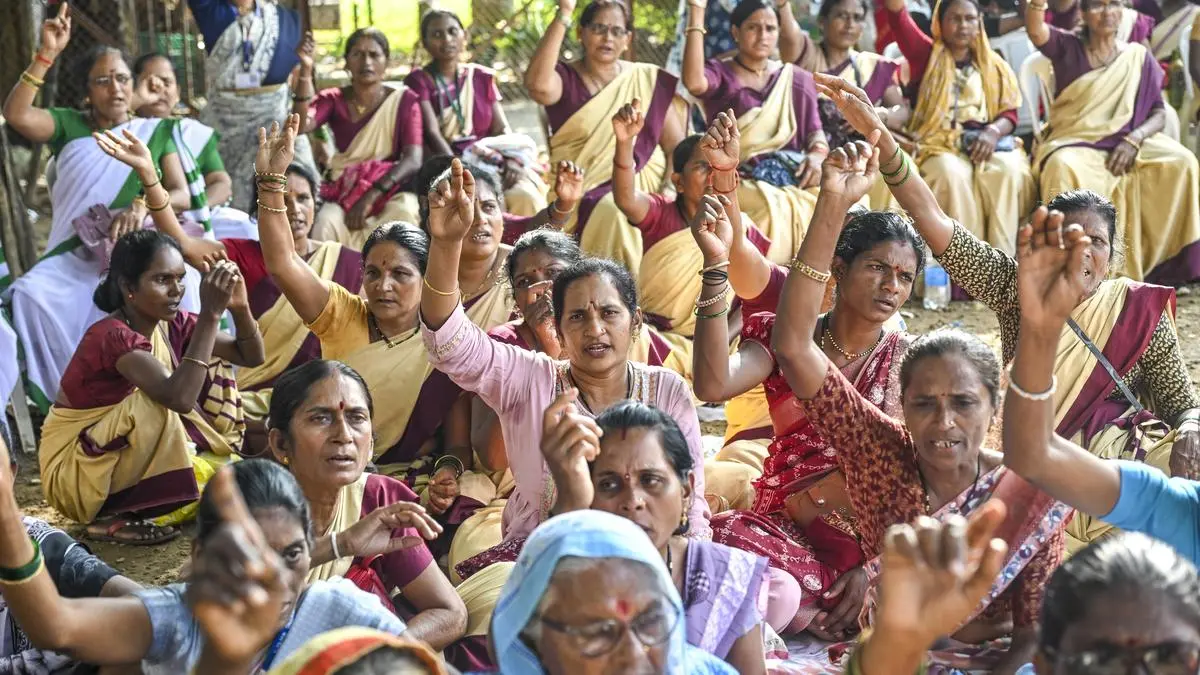
Accredited Social Health Activists (ASHAs), Auxiliary Nurse Midwives (ANMs), and anganwadi workers form the backbone of India’s community healthcare system under the Central government’s National Health Mission. While workplace violence against doctors and nurses is now part of public discussion, the daily risks faced by grassroots workers remain largely invisible.
A 2016 study in the Journal of Global Health Reports found that 94 per cent of ASHAs in rural northern Karnataka had experienced some form of violence in the previous six months. Of these, 88 per cent reported economic violence, 73 per cent emotional violence, 32 per cent sexual violence, and 26 per cent physical violence.
Despite such widespread vulnerability, recent conversations on safety have focused narrowly on urban hospitals and medical professionals. In its August 20, 2024, order on the R.G. Kar case, the Supreme Court discussed the absence of safety mechanisms for “medical professionals”—but defined them only as interns, residents, doctors, and nurses. (The WHO defines healthcare workers broadly, including midwives, community workers, and sanitation staff. India’s framework, however, reflects little of this inclusivity.) This omission, experts say, leaves out the vast network of rural and informal healthcare workers who are equally, if not more, exposed to danger.
On the ground, the lack of institutional protection has tangible consequences. “ASHA workers are very unsafe in their workplaces—they have no restrooms, no resting rooms, and no separate toilets,” said Madhumita Bandyopadhyay, general secretary of the ASHA Workers and Facilitators Federation of India (AWFFI). “When they accompany women in labour to hospitals, the government mandates that they be given a separate room. But this is rarely implemented.”
Often, even fellow healthcare staff deny ASHAs basic facilities. “They end up spending nights on hospital floors, staircases, or balconies,” Bandyopadhyay said. “When they travel long distances at night, they face further risks. Recently, in Kalimpong district of West Bengal, one ASHA worker jumped out of a cab to escape molestation—such incidents are common.”
“There are provisions on paper,” she added, “but on the ground, there are no safeguards—no streetlights, no clean washrooms, no transport. ICCs, where they exist, are mostly non-functional”.
The absence of effective safety and reporting systems only worsens the problem, said Kalita. “ASHAs do immense ground-level work. They go into sensitive areas, attend to deliveries at homes in villages, and when something goes wrong, they are often attacked. Very few of these incidents are ever reported,” she said.
Institutional shortages despite higher budget allocation
On June 9, 2025, a resident doctor at northwest Delhi’s Dr. Baba Saheb Ambedkar Medical College and Hospital was assaulted by five relatives following the death of a newborn. Resident doctors said no security personnel were present at the time, and the attack was stopped only after other doctors and nurses intervened. An institutional FIR was promptly lodged, invoking multiple provisions of the Bharatiya Nyaya Sanhita and the Delhi Medicare Service Personnel and Medicare Service Institutions (Prevention of Violence and Damage to Property) Act, 2008.
Despite this action, little has changed for the employees. “The basic security arrangements remain as before,” said Dr. Anirban Bhaumik, president of the Resident Doctors’ Association (RDA).
While no further major incidents have occurred since June, smaller confrontations persist. Though the hospital has CCTVs and has hired bouncers, Bhaumik said these measures are inadequate. “The security personnel on duty are not trained to handle violent situations. We’ve repeatedly demanded that the hospital employ trained security staff, preferably ex-servicemen, to handle volatile moments.”
Still, the underlying cause remains unaddressed. “The patient load in government hospitals is extremely high, and there’s always a shortage of doctors and staff. Residents are the backbone of these institutions, but we’re overburdened”, Bhaumik said. “This is not a short-term issue—it’s systemic and extends far beyond Delhi. The same conditions exist in hospitals across India.”
According to Siddesh Zadey, doctoral student at Columbia University’s Mailman School of Public Health and cofounder of the Association for Socially Applicable Research (ASAR), the roots of such violence lie in India’s chronically underfunded public health system. “In a ward that should have three resident doctors and six nurses for 30 patients, you might only have one resident and three nurses. Each worker then has far less time for every patient, and the workload becomes crushing,” he said.


Maternity wards crowded with patients at district headquarter hospital in Khammam, Telangana.
| Photo Credit:
G.N. RAO
While India’s healthcare budget has grown—from Rs.33,150 crore in 2015-16 to Rs.95,957 crore in 2025-26—the picture on the ground remains grim. The country has just 1.4 hospital beds per 1,000 people, far below the WHO-recommended 3.5. Government hospitals fare even worse, with only 0.79 beds per 1,000—a shortfall of about 2.4 million beds. The doctor-to-patient ratio stands at 1:1511, below the WHO benchmark of 1:1000. Seventy per cent Indians live in rural areas, yet only 40 per cent of India’s hospital beds serve them.
This shortage extends to infrastructure and basic consumables. “Everyone in the system is under strain—healthcare workers are exhausted, and patients’ families are frustrated by delays, limited attention, and out-of-pocket costs. It’s a high-pressure environment that corners everyone into a constrained emotional and physical space”, Zadey said.
He added that violent incidents are often triggered by small frustrations—a delay in treatment, a feeling of neglect, or lack of communication. “These are not failures of the doctor or the patient, but a failure of the system that puts everyone in impossible positions.”
According to ASAR’s research, violence in healthcare takes several forms: attacks by patients’ relatives (the most common), by patients themselves, among healthcare workers, by healthcare workers against patients, and even state-sponsored violence against medical personnel. Such incidents, Zadey said, are most common in public hospitals. “People often feel more entitled to services at public facilities and expect better treatment. The power dynamics are also different—patients in government hospitals feel more empowered to confront doctors.”
Emergency and psychiatric departments, he added, record the highest rates of violence. The most frequent targets are young resident doctors. “They bear the heaviest workload and interact most with patients and families. When something goes wrong, even if it’s beyond their control, they become the visible faces of accountability.”
Also Read | India’s approach to ageing and elderly care needs a fundamental reset
Class and social dynamics deepen the problem. “Residents are often young and from lower- or middle-class backgrounds, making them more ‘approachable’ and therefore more vulnerable than senior consultants.”
Zadey also underscored that true safety cannot be limited to guards and cameras. “Security can be as basic as ensuring streetlights between wards and hostels. Safety starts with addressing these infrastructural and cultural gaps,” he said. “If campuses lack lighting, counsellors, safe spaces, or anonymous reporting mechanisms, simply adding more guards won’t make people safe.”
He concluded that India’s response to such violence remains reactive rather than systemic. “Each time an incident occurs, the focus is on identifying the victim and perpetrator,” he said. “Until we recognise violence as an issue of the healthcare system and build long-term safeguards, nothing will really change.”


