


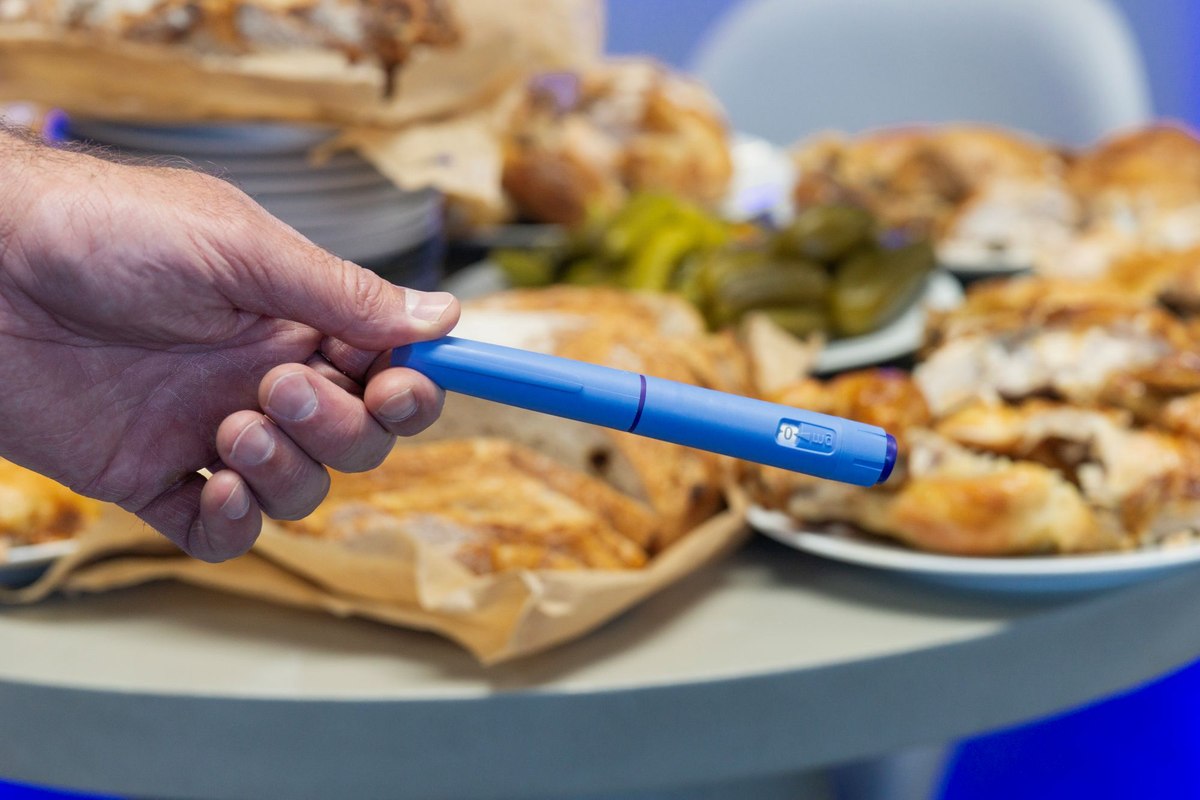
However, traditional approaches are often seen as effort-intensive and difficult to sustain. This drives demand for solutions that deliver faster, more predictable outcomes – a space where GLP-1 medications naturally fit.
From niche to scale: the rise of GLP-1
GLP-1 weight-loss medications have rapidly moved beyond medical circles into mainstream awareness, with 48% of European consumers already aware of Ozempic by 2025 (Trend Reality 2025). Awareness varies significantly: it is higher among Gen Z and in markets such as the Nordics, the UK, and Austria, peaking at 71% in Denmark, while remaining lower among Boomers and in markets such as Hungary and France. Economically, the impact is already material, with GLP-1 users representing €70 billion in FMCG spending power across Europe. (Who Cares? Who Does? Health 2025).
Across four key markets – Italy, the Netherlands, Germany, and Poland – as much as 3.6 million households are currently using GLP-1 medication. Taking consumers who plan to start using within the next six months into account, the user base could double in the short term, indicating strong demand momentum. Importantly, GLP-1 considerers behave differently:
- More snacking: German considerers spent €23 per buyer on savory snacks in the last 6 months vs. €15 on average.
- Less fruit and vegetables: In the same period, Italian considerers spent around €115 on fruit and vegetables vs. €150 among average shoppers.
Looking ahead, wider availability, lower prices, and next-generation therapies are likely to accelerate adoption. Even before launch, 5% of shoppers are already aware of triple-agonist treatments. GLP-1 is no longer a niche trend, but a fast-growing force already influencing FMCG demand ahead of full-scale adoption.
Beyond weight loss: a shift in consumption logic
The impact of GLP-1 extends beyond reduced appetite. While many users report eating smaller portions, snacking less, and experiencing prolonged satiety, the more important shift is in decision-making.
Reduced “food noise” does not simply lead to lower consumption – it leads to more selective consumption. Shoppers become more deliberate; expectations rise, and tolerance for low-value choices declines, fundamentally reshaping how value is defined.
What shopper baskets reveal
Purchase data confirms that the impact is not a simple volume decline, but a reallocation of value across categories. In the Netherlands, for example, users spend across 169 FMCG categories declines by 1%, while volumes drop by 5%, illustrating this shift. Reduction effects are visible in typical consumption-heavy categories:
- Snacking declines, amongst Germans both in spend (almost €10 less) and buyer reach (10 percent point drop)
- Soft drinks volumes decrease significantly e.g., -24% for fruity soft drinks, -30% for iced tea in the Netherlands
- Wine purchases among short-term users in Italy decreased significantly, while water consumption increased.
At the same time, health-aligned categories gain relevance:
- Higher spend on fruit and vegetables: Italian short-term users spent €145 pre-usage, increasing to €165 after starting treatment – the average buyer increased spend by only €4.
- Increased demand for fresh protein: Poultry volumes per buyer increased by 12% in the Netherlands – increasing from 4.1kg to 4.6kg within six months. Those who have used GLP-1 medications for over a year buy 7kg in the same period.
Side effects also drive compensatory behaviors. With 20% of users reporting digestive issues, the OTC category has grown by 13% over the past six months. Compared with the same period a year earlier, total user spend is up 69%.