





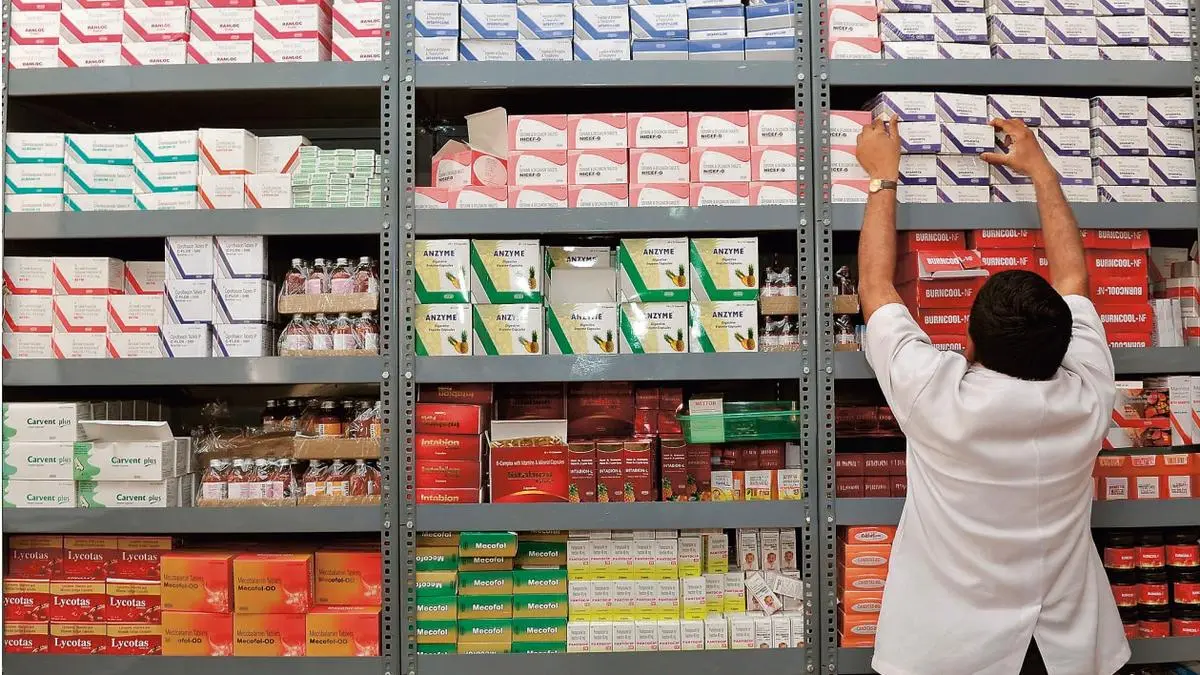
A typical discussion on the quality of drugs in India begins with worries about counterfeit drugs, which are legally defined as “spurious drugs” in the Drugs and Cosmetics Act, 1940. However, according to the last survey of the Indian market (2014–16) by the Union Ministry of Health & Family Welfare (MoHFW), the incidence of spurious drugs was estimated at a mere 0.0245 per cent. Simply put, the quantum of counterfeit or fake drugs in the country is negligible.
The far bigger problem is that of substandard drugs, which are defined as those not manufactured in compliance with mandatory standards or good manufacturing practices. Such substandard drugs, which include adulterated ones, can result in a failure of treatment, grave injuries, or even death.
Illustratively, over the past five years, there has been a spate of deaths arising from the consumption of adulterated cough syrups manufactured by the Indian pharmaceutical industry. These have taken the lives of about 200 children, both within the country (Jammu and Madhya Pradesh) and overseas (The Gambia, Uzbekistan, and Cameroon).
Contamination issues
The cause of death in all the cases was contamination by diethylene glycol (DEG), a renal toxin that affects the functioning of the liver and kidneys and eventually causes death, especially in children who have smaller, developing kidneys. DEG is an anti-freeze agent that should never be used in the making of medicines, yet its ends up in cough syrups because pharmaceutical manufacturers fail to check the quality of propylene glycol, an industrial solvent that is necessary to dissolve medicine to form the syrup.
Since DEG contamination is a known issue, the law requires manufacturers of cough syrups to mandatorily test any industrial solvent for the presence of DEG. But many companies often fail to conduct such testing, and that results in child deaths. In fact, there were four such tragedies between 1972 and 1998 in different parts of the country where medicine contaminated with DEG ended up killing more than 50 people.


It is important to understand that the problem does not stop with cough syrups. India also has a problem with contamination of products such as intravenous fluids and eye drops, which are supposed to be sterile.
In 2024, contaminated ringer lactate solution manufactured by a West Bengal–based manufacturer was blamed for the deaths of approximately seven young mothers in Karnataka and West Bengal who had just delivered babies. The fluid was meant to rehydrate them; instead, it led to their deaths. Other women were allegedly hospitalised owing to adverse events caused by the same fluid. It was later found that the ringer lactate solution had been contaminated with bacterial endotoxins.
Similarly, eye drops manufactured in India and exported to the US allegedly caused the deaths of some Americans and severe infections in others. Investigators have alleged that the eye drops were contaminated with multidrug resistant bacteria. The list of such incidents is rather long.
While contaminated and adulterated drugs that cause deaths grab the headlines, an equally urgent problem in India is the rise in complaints about the quality of generic drugs manufactured in the country. Generic drugs are copies of drugs manufactured by companies other than the one that invented them. In theory, generic drugs are supposed to have the same therapeutic effect as the innovator’s drugs and almost always be more affordable.
Low confidence in generics
Yet, in 2023, there was a major backlash from the medical community when the National Medical Commission (NMC) tried to enforce a new rule mandating that all doctors prescribe drugs by generic rather than brand names.
Simply put, if a doctor wanted to prescribe paracetamol, he would have to write paracetamol rather than brand names like Crocin or Dolopar on the prescription. The NMC’s reasoning was that doctors are influenced by the pharma industry to prescribe expensive brands and this mandate would force them to use generic names; the pharmacist would give the patient the most affordable generic option available.
Such laws are quite common across the world. In the US, many States have enacted “mandatory substitution” laws requiring pharmacists to provide patients with the most affordable generic alternative even if not mentioned by the doctor. Why then are Indian doctors opposing a helpful reform? They say they do not trust all the drugs available in the domestic market since they have seen patients who have not reacted as expected to many generic options available in the market.


A man displays a bottle of Coldrif cough syrup, which has been linked to the deaths of several children and which he had been giving to his 1-year-old child, in Madhya Pradesh’s Parasia town on October 10, 2025. The syrup, which was manufactured by Tamil Nadu-based Sresan Pharmaceuticals, has been banned in several States.
| Photo Credit:
PRIYANSHU SINGH/REUTERS
The doctors’ lack of confidence in all generic drugs results in their prescribing more expensive brands and patients ending up spending more money. This is hardly the ideal situation in a country that likes to boast of being the “pharmacy of the world”.
How, then, can this system be reformed to build the confidence of both doctors and patients in the quality of drugs available in the Indian market?
The Central Drugs Standard Control Organisation (CDSCO), India’s national drug regulator, is currently an administrative office attached to the Directorate General of Health Services (DGHS) under the Union MoHFW. The Drugs Controller General of India (DCGI), who heads the CDSCO, answers to the DGHS, which is headed by a Joint Secretary-level officer. On matters of policy, such as framing of regulations under the Drugs and Cosmetics Act, the entire rule-making power lies with the Joint Secretary who heads the “Drug Regulation” section within the MoHFW. This is an antiquated administrative set-up.
After liberalisation, India’s regulators have usually been statutory bodies, with considerable autonomy and rule-making power. This reduces the red tape and increases administrative efficiencies. It also allows for recruitment from the private sector without adherence to outdated recruitment rules. The national drug regulator needs to be restructured on these lines with a focus on staffing it with interdisciplinary experts from across the board and not just pharmacologists as is the case now.
Fragmented regulation
India currently has a very fragmented drug regulatory structure. Key regulatory functions are divided between the Central and State governments. In its original avatar, the Drugs and Cosmetics Act vested in the Central government the power to regulate imports, while the power to regulate domestic manufacturing lay with individual States. This model continued for the most part after Independence, with some functions like standardisation and approval of new drugs getting consolidated under the Central government.
But the key task of issuing manufacturing licences continued to rest with the drug controllers in the States and Union Territories. As a result, there are effectively 37 drug regulators in the country. This creates an administrative nightmare and a democratic deficit.


At an inspection of stock at a medical store, in Chhindwara, Madhya Pradesh, on October 11, 2025.
| Photo Credit:
PTI
For example, when a drug manufactured in Himachal Pradesh is tested by inspectors in Karnataka and fails testing, the drug controller in Karnataka can only inform their counterpart in Himachal Pradesh and perhaps institute a criminal prosecution that will take years to wind through our sclerotic legal justice system. They cannot take other steps such as inspecting the manufacturing facility in Himachal Pradesh or cancelling the licence of the manufacturer or blocking further sales of the same manufacturer’s drugs in Karnataka. Only the drug controller in Himachal Pradesh can do so because of jurisdictional issues. In summary, there is little that the electorate in Karnataka can do to hold to account the bureaucrats or elected Ministers of Himachal Pradesh.
For a long time now, there have been recommendations to consolidate enforcement of regulation under the Centre’s control. It is common for countries with a federal system of government like India to centralise the regulation of drugs. One of the reasons for adopting this model is that drugs typically move across States and hence, a Central regulator is expected to ensure uniform and consistent enforcement of the law. Transferring the power to regulate drugs from State governments to a regulator under the Central government would increase accountability as MPs from across the country can raise questions in Parliament on the issue of drug quality any time there is a scandal, regardless of where the drug was manufactured.
But there is massive opposition from the pharmaceutical industry, especially the small and medium sector. A significant reason for this is that industry lobbies find it easier to negotiate with the bureaucracy and politicians at the State government level than at the Central government level. While consolidating drug regulation with an entity under the Centre’s control is important, that by itself will not change the quality of regulation until the problem of opacity within the system is solved. Indian regulators barely make available any information about how they regulate the industry.


Regulators in developed countries publish ample information about the scientific basis of their approval of new drugs, inspection reports of manufacturing facilities for compliance with good manufacturing practices, and enforcement actions against pharmaceutical companies, including orders to recall drugs.
Infomation and transparency
In India, neither the CDSCO nor the State drug controllers make available similar information about the domestic pharmaceutical industry. At most, test results of drugs sampled from the market by drug inspectors and tested in government laboratories are sometimes made publicly available, but the practice is not uniform across the country.
The test reports, which detail the method of testing and the standards used to test, are rarely made publicly available. As of today, India does not have a single database where citizens can track the test records of specific manufacturers or drugs.
This lack of sufficient information about regulatory activities has serious implications for public health. Procurement officers in both the public and private sectors lack information about pharmaceutical companies bidding for tenders or contracts. As a result, some public procurement corporations, like the one in Tamil Nadu, conduct their own inspections of manufacturing facilities of pharmaceutical companies bidding for tenders. This results in an unnecessary and costly duplication of work.
Improving transparency will also help ensure greater accountability amongst the bureaucracy. Once drug inspectors are aware that their reports will be made publicly available, they are more likely to conduct serious inspections.
Similarly, if test reports are publicly available, it will be possible for citizen watchdogs to check whether government laboratories are conducting all the prescribed tests in a consistent manner. It is known that on occasion, government laboratories are forced to skip some tests because they lack the impurity standards that are to be supplied by the Indian Pharmacopoeia Commission or because they lack functioning testing equipment.
Of all the reforms ever suggested to the drug regulatory framework, improved transparency will have the most impact.
Some attempts were made in the past to reform the regulatory framework, but they failed because of persistent and effective lobbying by the industry. In fact, even incremental reforms such as upgrading standards to bring them into compliance with those recommended by the WHO have been delayed thanks to industry pressure.
The bureaucracy within the MoHFW has shown little interest in this issue other than issuing threats against anyone who speaks about it publicly. Instead, the establishment proposes ineffective measures such as outsourcing the inspection of manufacturing facilities without fully appreciating the implications of such changes. Existing provisions to bring wrongdoers to justice are being diluted, as has been done with the Jan Vishwas Act, 2023, which removes whatever little power the courts had to punish those manufacturers who are caught and proven guilty in a court of law of the offence of manufacturing substandard drugs.
It is high time we held the pharmaceutical industry accountable and not let it get away with harming users with impunity.
Dinesh Thakur and Prashant Reddy Thikkavarapu are co-authors of The Truth Pill: The Myth of Drug Regulation in India (2022).
Also Read | They knew they were going to injure and kill hundreds of thousands of people: Gardiner Harris
Also Read | ORS mislabelling: Corporate greed puts children’s lives at risk


