





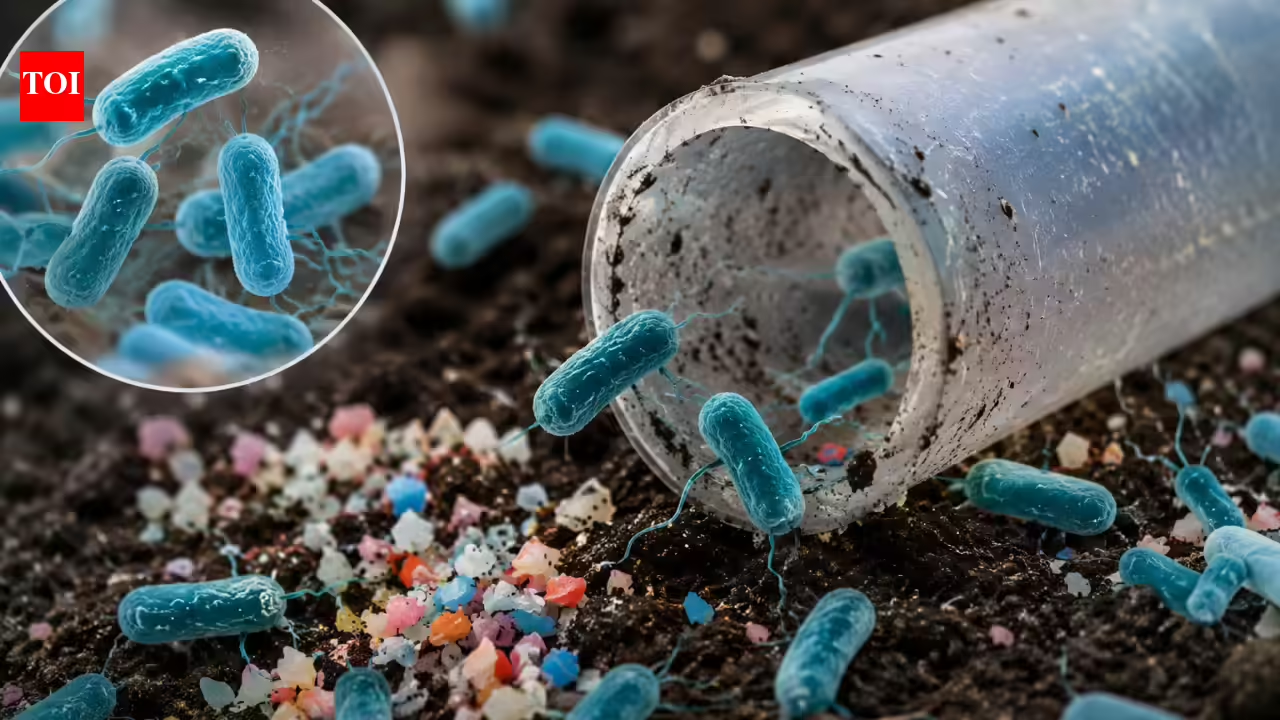

Plastic has a habit of staying around long after its useful life has ended. Some materials can be collected and recycled with relative ease, while others prove far more stubborn. Polyvinyl chloride, commonly known as PVC, sits firmly in the latter category. Used in products ranging from pipes and electrical cables to flooring and medical equipment, it is valued for its strength and durability. Those same qualities, however, make it difficult to deal with once it enters the waste stream.That challenge has prompted scientists to look beyond traditional recycling methods. Across different parts of the world, laboratories are exploring whether naturally occurring microorganisms can help break down materials that would otherwise persist in the environment for years. A study published in the journal Microbial Cell Factories titled “Features of Thermal Stabilisation of PVC Modified with Microstructured Titanium Phosphate” has now added fresh evidence to that effort, describing bacterial strains that appear capable of degrading PVC microplastics under controlled conditions.
How Egyptian scientists found bacteria capable of breaking down PVC microplastics
The work began with soil collected from areas exposed to long-term plastic contamination. According to the paper, the team was interested in environments where microbes may already have adapted to the presence of synthetic waste. Such locations can act as natural testing grounds, offering clues about how bacteria respond when plastics become part of their surroundings.The study published in the National Library of Medicine, titled “A novel bacterial consortium isolated from long-term plastic-contaminated soil exhibits efficient biodegradation of polyvinyl chloride microplastics”, focused on isolating bacterial strains that showed signs of interacting with PVC particles. Once identified, those strains were subjected to a series of laboratory assessments designed to determine whether any measurable breakdown of the material was taking place.
Scientists test bacteria that can break down hard-to-recycle PVC plastics
As reported in the study published in the National Library of Medicine, isolated from Long-Term Plastic-Contaminated Soil Exhibits Efficient Biodegradation of Polyvinyl Chloride Microplastics, one strain emerged as the strongest performer. Known as Stutzerimonas sp. NH2, it produced a reduction of more than 23 per cent in the weight of PVC microplastics used during the experiments.Another bacterium, Glutamicibacter nicotinae NH27, also demonstrated degradation activity, although at a much lower level. The picture changed when the two microorganisms were combined. The paper states that a consortium containing both strains achieved a greater reduction in PVC weight than either bacterium managed individually, reaching nearly 27 per cent under the conditions tested.
Evidence suggests bacteria were actively breaking down PVC microplastics
The scientists did not rely solely on weight measurements. According to the study, microscopic examination of the treated plastic revealed visible surface damage, including cracks and grooves that were absent from untreated samples.Other analytical techniques pointed in a similar direction. Chemical signatures associated with the plastic shifted after exposure to the bacteria, while thermal analysis suggested changes in the material’s structure. The authors also reported detecting compounds linked to PVC degradation, adding another layer of evidence that the microbes were doing more than simply attaching themselves to the plastic surface.Some of these changes were subtle. Others were easier to observe. Taken together, they formed the basis for the study’s conclusion that biological activity had altered the microplastics during the experiment.
What the findings mean for future PVC microplastic research
The paper describes this as the first reported evidence linking Stutzerimonas sp. NH2 and Glutamicibacter nicotinae NH27 to the degradation of PVC microplastics. That makes the work an early step rather than a finished solution.Laboratory conditions are tightly controlled and rarely mirror the complexity of natural environments. Questions remain about how these bacteria would perform outside experimental settings, how quickly degradation could occur on a larger scale and whether similar results could be achieved in real-world waste management systems.Even so, the findings contribute to a growing area of research centred on biological approaches to plastic pollution. While recycling, collection systems and material redesign continue to dominate the discussion, studies such as this one suggest that some of nature’s smallest organisms may eventually play a supporting role in dealing with plastics that have long been considered difficult to recycle.


