





BAKERSFIELD, Calif.(KBAK/KBFX) — During Men’s Health Month, local health experts are encouraging men to prioritize routine checkups and preventive care, warning that delaying medical treatment can lead to more serious health problems down the road.
According to the Centers for Disease Control and Prevention, men in the United States have a life expectancy of 76.5 years, compared to 81.4 years for women.
Dr. Hemmal Kothary, Chief Medical Officer for Mercy Hospital in Bakersfield, said one of the biggest reasons many men avoid medical care is fear.
“I think the biggest reason that they do wait is, I think we have this macho-ness in us that we tend to want to hold off and stuff that- everything’s fine until it’s not,” Dr. Kothary said.


local ask the expert mens health.PNG
He added that many men are afraid of receiving bad news from a doctor.
“I think the biggest one is I think the fear of getting some bad news, right? I mean, men are more scared of that than women,” he said.
That fear is something some Bakersfield residents say they can relate to.
Andrew Guerrero admitted that seeking medical care is not always a priority.
“I will wait till my leg falls off before I see a doctor about it,” Guerrero said.
When asked why he tends to delay appointments, Guerrero said work often gets in the way.
“It’s a scheduling thing. I work eight to five every day, so it’s pretty hard to make time to schedule a doctor’s appointment,” he said.
He also acknowledged that he often doesn’t feel the need to seek medical attention unless something feels serious.
“Well, I just kind of don’t feel the need to unless it’s something really serious. For the most part, I think I can just take care of it myself,” Guerrero said.

eg12 pain doctor 3_frame_1028.jpeg
For Roverto Gonzalez, delaying care nearly came at a much higher cost.
“I know I’m sick, but yet, I’m trying not to believe that I’m sick,” Gonzalez said.
He said denial and pride kept him from seeking help for years.
“I think mentality thinking…if I don’t accept it, I’m not there,” Gonzalez said.
According to Gonzalez, that mindset eventually led to multiple hospitalizations.
“Being in denial almost cost me my life a couple of times, you know, medically,” he said.
Now, he encourages other men to seek help before their health worsens.
“I’d say, as soon as you start feeling a problem, you know, before it gets any worse, it doesn’t hurt to go have it checked out,” Gonzalez said.

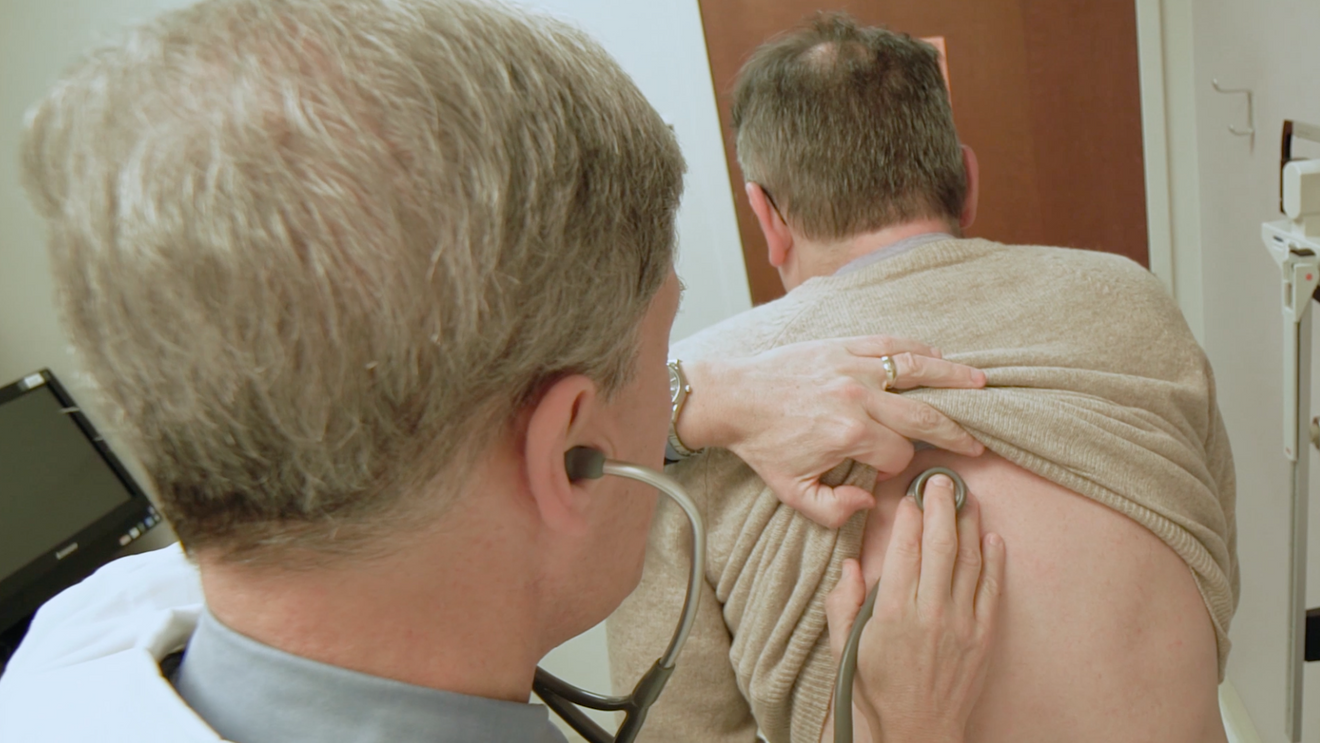
A doctor provides a check-up for a patient. (American Lung Association, file image)
He also had a message for men who may be hesitant to make an appointment.
“Drop your pride,” Gonzalez said. “Health is everything. Health is life. And without your health, you’re dead.”
Dr. Kothary said that while many men wait until symptoms appear, some serious health conditions may not show warning signs at all.
“If we catch prostate cancer early enough, it’s 100% curable,” Dr. Kothary said. “If we catch something early enough, completely curable, if you wait too long, and it spreads, it’s hard to cure.”
He noted that prostate cancer often develops without obvious symptoms in its early stages.
“Typical symptoms of prostate cancer are none. You don’t get any symptoms,” he said.
The physician said annual physicals and routine blood work can help identify potential health concerns before symptoms develop.
“I think the simplest thing would be get a screening physical, right? And that would include going in, getting an actual physical exam and screening blood work,” Dr. Kothary said. “It really can be that simple.”


390487 08: (FILE PHOTO) A doctor goes over a patient”s x-ray, screening for colon cancer. There is no single cause of colon cancer. Cancer of the colon and rectum accounts for 15% of cancer deaths. (Photo by American Cancer Society/Getty Images)
The doctor also emphasized that mental health should not be overlooked.
“The biggest reason, I think, for that is most men, when they have symptoms that are afflicted by mental health, it may not be the sadness or the crying,” Dr. Kothary said. “A lot of men will show agitation or anger issues.”
Dr. Kothary said those symptoms may actually be signs of anxiety or depression rather than anger alone.
When it comes to encouraging men to schedule appointments, he said family members often play a key role.
“A lot of times…when I go into a patient’s room, I ask them what they’re there for, and it’s usually my wife made me come in,” Dr. Kothary said.
During Men’s Health Month, Dr. Kothary encourages men to establish a relationship with a primary care physician and schedule routine checkups.
“Just go and see a physician. Build a relationship with a physician,” he said. “At least at the most minimum, get a baseline blood panel.”


