


Photo by Whitney Downard/Pennsylvania Capital-Star
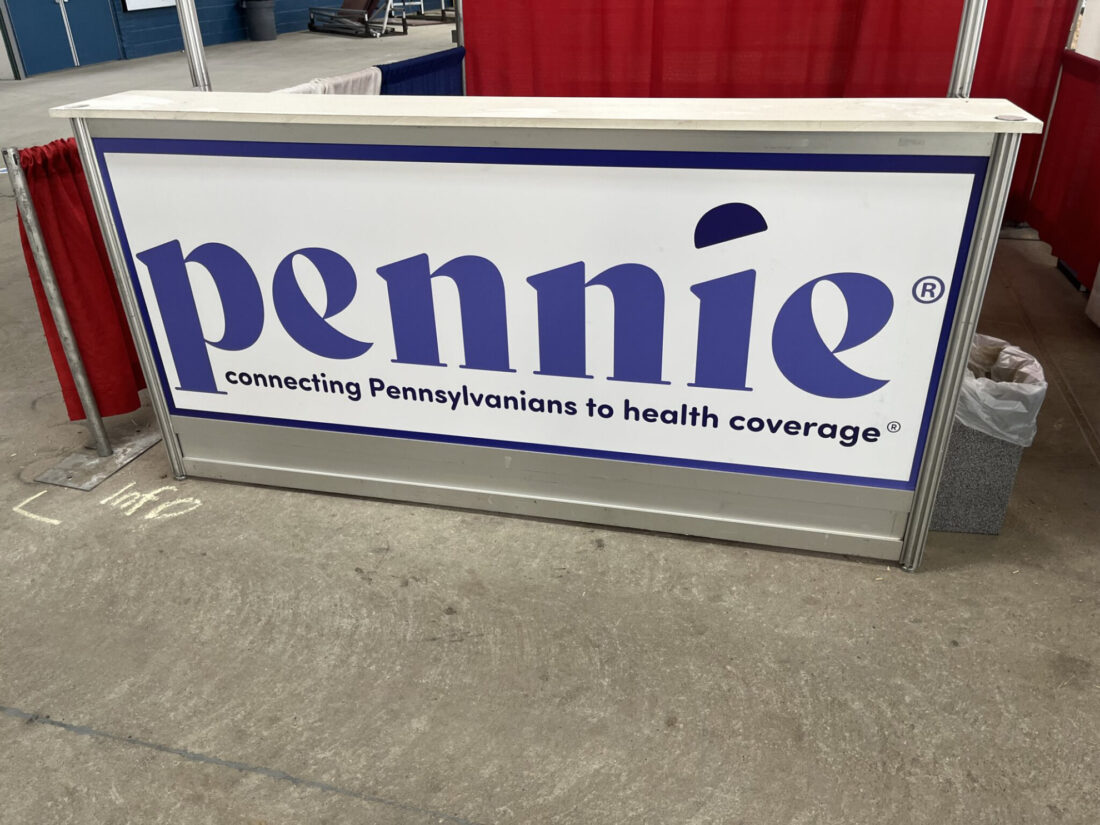
A Pennie sign seen at the 2026 Pennsylvania Farm Show on Jan. 8.
Enrollment in the state’s Affordable Care Act marketplace, which offers discounted health insurance coverage, declined by 160,000 Pennsylvanians after Congress allowed enhanced subsidies to expire in December.
Pennie shared on Tuesday that departing members reported higher costs as their top reason for forgoing coverage in the public marketplace. Roughly one-third of people who had coverage in 2025 are no longer enrolled.
When Pennie’s open enrollment period ended on Jan. 31, 486,000 people were signed up — a decrease from last year’s record-breaking 497,000 enrollees. In the last four months, another 40,000 have left the marketplace.
According to a release, “The number of Pennsylvanians who drop coverage increases every day. The most impacted populations are lower income, older but not yet eligible for Medicare, and rural.”
The average premium increased by 102%, though some people reported that their monthly costs tripled.
Marketplace health insurance enrollment in government-subsidized plans grew following the federal 2021 COVID-10 relief package that passed under former President Joe Biden. Extending the subsidies beyond the 2025 expiration date is popular across the country, but they were allowed to expire due to Republican concerns over the costs to the federal government.
In total, the price tag is $1 trillion to subsidize marketplace plans. Roughly one-third of that goes to the enhanced subsidies that increased the coverage threshold to $62,600 for a single person or $84,600 for a family of two.
Some of the people leaving Pennie may have secured over coverage through their employer or aged into Medicare, but many chose to forgo coverage for 2026.
“Pennie has heard from multiple Pennsylvanians facing the difficult decision to go without health coverage,” the release continued. “Many have reported that the decision to keep or drop coverage is not a matter of choosing a different plan, but of choosing between health coverage and other necessities like rent, food, and utilities.”
Some of those still enrolled shifted their preferences, opting for the bronze plans with lower monthly premiums and higher out-of-pocket costs — though people who chose those plans during open enrollment are still dropping their coverage. Pennsylvanians with qualifying life events, such as moving or having a baby, may still enroll in Pennie outside of the open enrollment period.
KFF Health News reported an uptick in the number of people nationwide who have chosen cheaper, alternative plans outside of state-operated marketplaces, which critics dismiss as “junk insurance.” These plans may not provide comprehensive coverage and aren’t required to have the same consumer protections.
Pennie’s next open enrollment period for 2027 starts on Oct. 15 and ends on Dec. 15.
——
Pennsylvania Capital-Star is part of States Newsroom, a network of news bureaus supported by grants and a coalition of donors as a 501c(3) public charity. Pennsylvania Capital-Star maintains editorial independence. Contact Editor Tim Lambert for questions: info@penncapital-star.com. Follow Pennsylvania Capital-Star on Facebook and Twitter.
