

The COVID-19 pandemic transformed biological research from a specialised scientific pursuit into a subject of global political debate. High-containment laboratories, pathogen surveillance, biosafety and gain-of-function (GoF) research, once discussed largely within scientific journals, have become matters of public policy and national security.
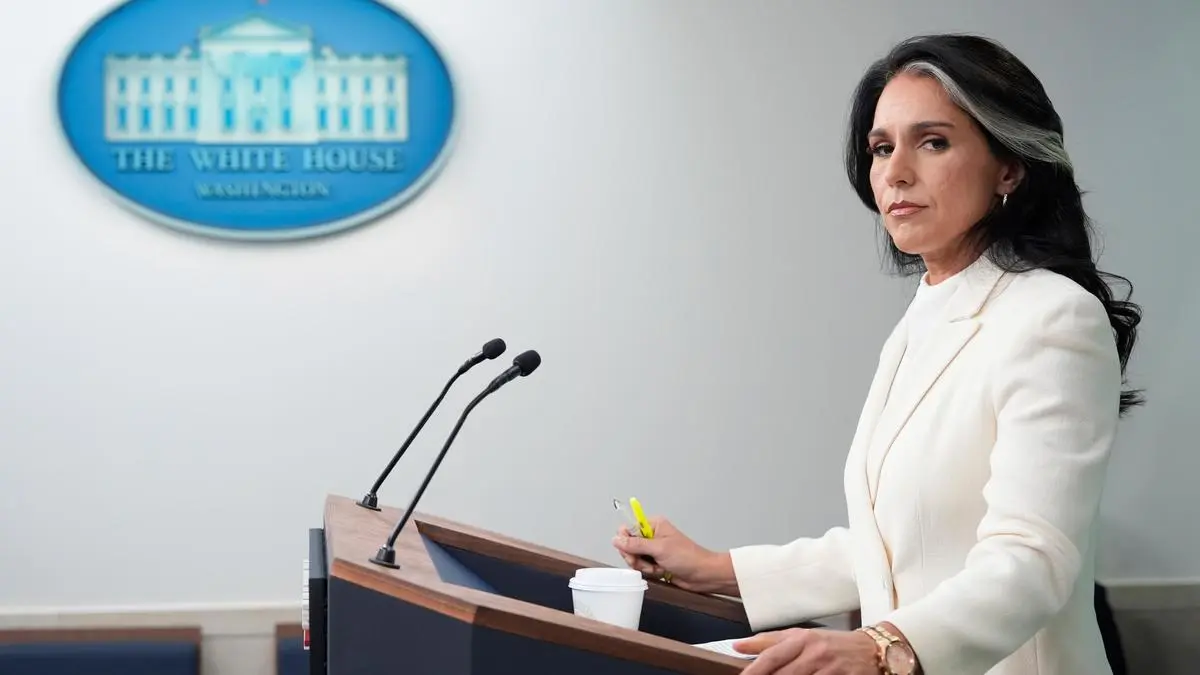
The recent disclosures by the US Office of the Director of National Intelligence (ODNI), released by Director Tulsi Gabbard on June 12, have added another dimension to that debate. The disclosures acknowledge that the US funded more than 120 biological laboratories in more than 30 countries, with some of those facilities conducting GoF research.
GoF research involves experiments that enable new functions in organisms through genetic changes, whether these occur naturally or are induced through deliberate modification. Modifications of viruses to affect transmissibility, virulence, or resistance to medicines are among its forms. Proponents argue that such research can accelerate drug and vaccine development and improve pandemic preparedness; critics contend that any work capable of enhancing a pathogen’s pandemic potential carries serious biosafety and biosecurity risks.
The documents released by Gabbard neither establish misconduct nor implicate every overseas laboratory in controversial research. They do, however, leave one important question unanswered. While acknowledging US support for biological laboratories in more than 30 countries, the publicly released material does not identify every country or institution involved.
For India, the issue is not conspiracy. It is governance.
India does not appear among the countries identified in the material. The absence of public identification cannot be interpreted as definitive proof that no US-supported biolab existed or exists in India. The publicly available evidence neither confirms nor excludes such possibilities. Where official disclosures remain incomplete, transparency—not speculation—becomes the appropriate public response.
That question deserves attention because foreign participation in India’s biological sciences is neither recent nor unusual.
Long history of collaboration
For more than seven decades, India’s public health and biomedical landscape has been shaped by Western involvement, both overt and covert. Philanthropic organisations such as the Rockefeller Foundation and the Ford Foundation played influential roles in shaping India’s public health agenda and research priorities through much of the 20th century.
In the early 1970s, a WHO-initiated and US-funded project—the Genetic Control of Mosquitoes Unit (GCMU), run in collaboration with ICMR—released laboratory-reared mosquitoes outside Delhi in what were the first large-scale field trials of the genetic control of mosquitoes. The work predated modern genetic engineering and relied on approaches such as the sterile insect technique and chemical sterilisation. Disbanding in 1975, the project had already become an object of political controversy.
After a prolonged hiatus through the Cold War years, new partnerships began taking shape. The Indo-US Vaccine Action Programme (VAP) was formally established in July 1987, jointly administered by India’s Department of Biotechnology (DBT), ICMR, and the National Institute of Allergy and Infectious Diseases (NIAID). It became one of the longest-running biomedical partnerships between the two countries, supporting collaborative research across virology, immunology, diagnostics, epidemiology, and vaccine development, and strengthening institutional capacity and scientific exchanges.
Among its most celebrated outcomes was ROTAVAC, India’s first indigenous rotavirus vaccine. Originating from the discovery of the naturally attenuated 116E rotavirus strain at AIIMS, New Delhi, the vaccine emerged through collaboration involving AIIMS, DBT, ICMR, NIH, CDC, PATH, Bharat Biotech, and several international partners.

Dr K. Bhan, former Secretary of the Department of Biotechnology (DBT); Dr K. Vijay Raghavan, DBT Secretary; and Dr Krishna M. Ella, Chairman and Managing Director of Bharat Biotech, at a press conference announcing the Phase III trial results of the Rotavac vaccine in New Delhi on May 14, 2013.
| Photo Credit:
SHIV KUMAR PUSHPAKAR
Over subsequent decades, collaborations expanded to include the US Centers for Disease Control and Prevention (CDC), the National Institutes of Health (NIH), NIAID, and numerous academic institutions. Indian organisations, including ICMR, have participated in collaborative projects on infectious diseases, genomics, vaccines, and epidemiological surveillance.
During the COVID-19 pandemic, collaborative efforts helped shape India’s indigenous vaccine response. But collaboration and sovereign oversight are not mutually exclusive. If anything, they reinforce each other.
When science meets politics
The GCMU controversy moved rapidly beyond scientific circles. Journalistic investigations, parliamentary debates, and a critical report of the Public Accounts Committee questioned whether India exercised sufficient control over the programme and whether its objectives adequately reflected national priorities. Amid mounting political pressure, the project was terminated. Whether or not every allegation made at the time was justified, the episode established an enduring principle: biological research involving foreign partners must command public confidence as well as scientific merit.
What is gain-of-function research?
Experiments that deliberately alter a virus or other microorganism to study how changes in genetic makeup affect properties such as transmissibility, host range, virulence, or resistance to medicines.
Scientists argue that such research can help develop vaccines, drugs, and better pandemic preparedness by anticipating how pathogens might evolve naturally.
Critics contend that experiments capable of enhancing a pathogen’s pandemic potential carry biosafety and biosecurity risks if accidentally released or deliberately misused.
More than a decade later, a debate emerged from a very different field.
In 1986, The Illustrated Weekly of India published a cover story by the environmentalist Claude Alvares titled “The Great Gene Robbery.” Alvares argued that India’s rich genetic wealth—particularly traditional rice varieties—was being taken through international agricultural research networks without adequate recognition of India’s sovereign interests. His investigation focused on the International Rice Research Institute (IRRI) in the Philippines, established with support from the Rockefeller Foundation and the Ford Foundation.
Although some disputed aspects of his conclusions, the article helped ignite a national conversation on biological resources, intellectual property, and what would later become known as biopiracy. Decades before the Convention on Biological Diversity and the Nagoya Protocol recognised national sovereignty over genetic resources, India was debating who owned its biological heritage.
The questions resurfaced in a different form during the controversy surrounding the Manipal Centre for Virus Research (MCVR), set up by the Manipal Academy of Higher Education.
US biological programmes and India
1960s: US supports agricultural, nutrition, infectious disease, and public health research through agencies such as USAID, NIH, CDC, the Rockefeller Foundation, and the Ford Foundation.
1970s: WHO-ICMR Genetic Control of Mosquitoes Unit (GCMU) in India becomes the subject of parliamentary scrutiny and is disbanded in 1975.
1980s: Indo-US Vaccine Action Programme (VAP) formally established in July 1987. Increased collaboration in vaccine research and biotechnology.
1990s: Collapse of the Soviet Union leads to the Cooperative Threat Reduction (CTR) programme to secure dangerous pathogens and biological materials in former Soviet republics.
2001 onwards: Following the September 11 attacks and the anthrax-letter incidents, the US expands global biosecurity programmes.
2003–2019: SARS, H5N1 influenza, Ebola, MERS, and Zika accelerate international investment in laboratory capacity, pathogen surveillance, and pandemic preparedness.
2020 onwards: COVID-19 places unprecedented scrutiny on biosafety, laboratory governance, GoF research, and international biological collaborations.
Established as one of India’s leading centres for virological surveillance, the laboratory worked with national and international agencies to investigate influenza, dengue, chikungunya, Nipah, and other emerging infections. Questions arose over the shipment of biological samples abroad, regulatory approvals, foreign collaborations, and the laboratory’s institutional standing. Investigations by the Union Health Ministry and ICMR followed. The laboratory was directed to discontinue describing itself as a WHO-recognised National Influenza Centre after procedural concerns emerged over its designation.
Post-COVID scenario
The context has changed considerably since these earlier episodes.
Successive outbreaks of SARS, H5N1 influenza, H1N1, Ebola, MERS, Zika, and COVID-19 have reshaped the global architecture of infectious disease research. Countries have invested heavily in Biosafety Level-3 (BSL-3) and Biosafety Level-4 (BSL-4) laboratories, genomic surveillance, pathogen sequencing, and vaccine platforms. India has expanded its own high-containment laboratory network while emerging as one of the world’s leading vaccine producers.

Congolese medical workers in PPE carry children from Saint Nicholas Orphanage who tested negative for Ebola at the Centre Medical Evangelique in Bunia, Ituri province, Democratic Republic of the Congo, on June 9, 2026, amid efforts to contain an outbreak of the Bundibugyo strain.
| Photo Credit:
Gradel Muyisa Mumbere/REUTERS
Research involving dangerous pathogens now occupies a unique ethical and regulatory space. Even when conducted for entirely legitimate purposes—disease surveillance, diagnostics, or vaccine development—it demands exceptional standards of biosafety, biosecurity, and regulatory oversight.
The ODNI disclosure, therefore, is not primarily a question of whether every identified overseas laboratory conducted GoF research, or whether foreign-funded science is inherently suspect. The real question is whether governments disclose enough information to permit meaningful oversight of research involving potentially dangerous pathogens.
For India, that translates into a series of practical questions.
• Does the country maintain a comprehensive public registry of foreign-funded research involving high-consequence pathogens?
• Which agencies approve such collaborations?
• How frequently are biosafety audits conducted?
• Are Parliament or independent oversight bodies periodically informed?
• After the US government acknowledged supporting biological laboratories in more than 30 countries without disclosing a full list, has India sought formal clarification regarding any historical or current collaborations involving Indian institutions?
These are questions of democratic accountability.
Three things India needs to do
The ODNI disclosures are a prompt for India to reassess its biosafety governance. Biology today is a strategic technology. Advances in genomics, synthetic biology, and AI-assisted drug discovery and pandemic surveillance have made biological research central to national security and public health. As the biotech sector expands, governance frameworks designed for an earlier era may no longer be adequate.
First, India should maintain a publicly accessible registry of foreign-funded research involving high-consequence pathogens, recording funding sources, collaborating institutions, regulatory approvals, and the broad objectives of each project.
Second, oversight needs to be more integrated. Responsibility is currently dispersed across multiple agencies—DBT, ICMR, the Central Drugs Standard Control Organisation, institutional biosafety committees, and other regulatory bodies. A coordinated national mechanism for reviewing high-risk biological research would improve consistency, accountability, and public confidence.
Third, all international collaborations involving BSL-3 and BSL-4 laboratories, pathogen enhancement studies, and the overseas transfer of biological materials should be subject to periodic review—evaluating not only scientific merit but also biosafety, biosecurity, data governance, intellectual property arrangements, and national interest.
Parliament should play a more active role. Just as parliamentary committees routinely examine defence procurement, nuclear energy, and major public expenditure, they should periodically review India’s biosafety preparedness, laboratory governance, and international biological collaborations.
Democratic oversight need not impede scientific research. When properly designed, it strengthens public trust and institutional credibility.
Ameer Shahul is the author of the bestselling book Vaccine Nation: How Immunisation Shaped India (Macmillan, 2025). His forthcoming title, The Silent Syndicate: Who Prices Your Health (Hachette, 2026), explores the changing dynamics of India’s healthcare ecosystem.
Also Read | Indian women enter STEM fields in record numbers. But why do they vanish from academic positions?
Also Read | The sixth mass extinction is here—and it’s killing humans too
