

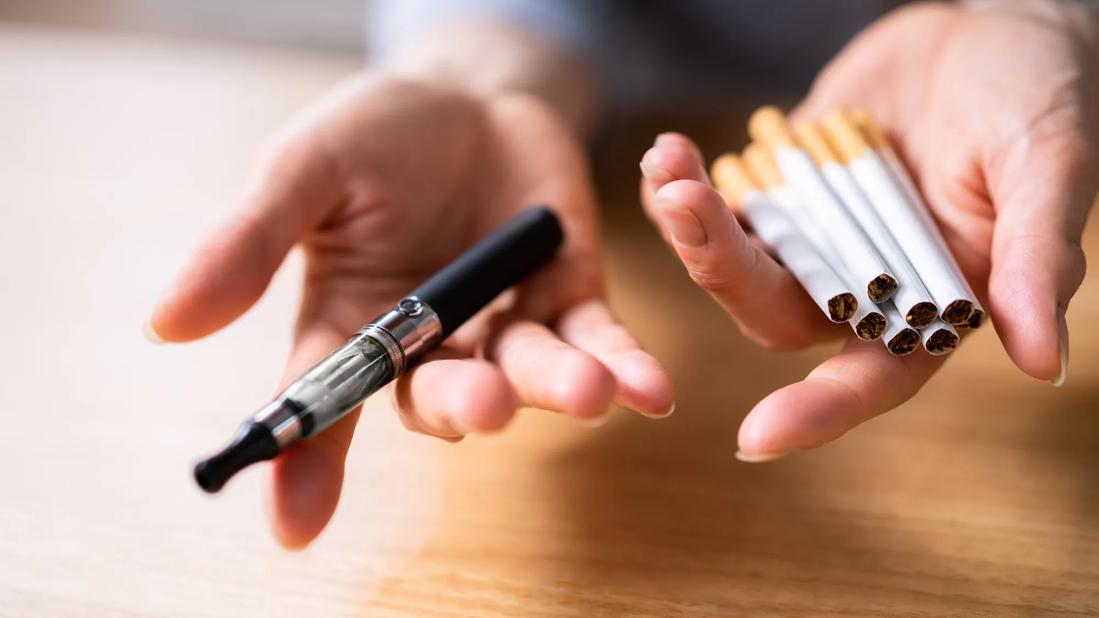
Some people claim vaping is safer than smoking tobacco products, and many consumers are buying in. But how do e-cigarettes and cigarettes really stack up when it comes to your health?
Advertisement
Cleveland Clinic is a non-profit academic medical center. Advertising on our site helps support our mission. We do not endorse non-Cleveland Clinic products or services. Policy
To help sort fact from fiction, we talked to pulmonologist Peter Mazzone, MD, MPH, Director of Cleveland Clinic’s Lung Cancer Screening Program. Dr. Mazzone explains why vaping and smoking are both dangerous.
Health risks to consider
Here’s the thing about comparing vaping vs. smoking: Both cause unnecessary damage to your health and increase your risk of serious illness. The good news? Quitting either will have an immediate, positive impact on your overall health.
Vaping
When you smoke cigarettes, you inhale smoke and combustion chemicals. While you can avoid these with vaping, you’re still being exposed to toxic particles that can harm your body and cause severe health issues.
Contrary to what many people believe, the “mist” you breathe in from an e-cigarette isn’t water vapor. The contents of e-liquids vary, but they generally contain:
- Nicotine: Vapes deliver this highly addictive compound — in aerosol form — directly into your lungs and bloodstream. This can lead to dependence and other health risks.
- Heavy metals: E-cigarette components, such as heating coils, often release harmful heavy metals, like lead, nickel, cadmium and more. These metals can irritate your tissues, cause allergic reactions, damage your organs and may even act as carcinogens (cancer-causing substances).
- Toxic chemicals: Vape juice and flavorings contain dangerous compounds. Diacetyl, which can cause popcorn lung, is just one example. They also include carcinogens, like acetaldehyde and formaldehyde. That’s right — you’re breathing in the stuff they use to preserve dead bodies.
That’s bad enough. But there are plenty of other health risks associated with e-cigarettes, including:
- Contamination: You may be in danger of using unregulated vaping materials. From mold and undeclared allergens to pesticides and harmful additives, these products could expose you to dangerous substances not intended for inhalation.
- Device malfunctions: It’s nobody’s first thought, but like any battery-operated technology, vape pens can explode or catch fire, injuring your hands, neck, face and more.
Vaping is still a fairly new behavior. But experts are learning more and more about the health risks with each passing day. And it’s not looking good. Research links chemicals found in e-cigarette vapor with head and neck cancers, Dr. Mazzone says.
Have you heard differently? It could be because the U.S. Food and Drug Administration (FDA) defines several common chemicals in vape juice as “generally recognized as safe.” But that designation only applies to ingesting those chemicals, not inhaling them, as you do when you vape.
“These substances have unknown health effects on the lungs and need more study,” Dr. Mazzone states.
Cigarettes
You’ll find just as many dangerous substances in a cigarette as you do in a vape, and the health risks mirror each other. But lighting up also comes with other risks.
From a health perspective, cigarettes are the ultimate health risk.
“Cigarette smoking is the most well-researched of the nicotine delivery systems, and undoubtedly poses serious and significant health risks, which have been clearly defined,” Dr. Mazzone reports. He names a few of them:
- Head, neck, lung, esophageal, pancreatic and urologic cancers
- Heart diseases
- Lung diseases
- Increased chronic pain
- Wound healing issues
- Infertility and miscarriage
- Mental illness
Other risks associated with smoking cigarettes include:
- Fire damage: This one’s pretty obvious. One false move could mean your book, your scarf or that pile of dry brush goes up in flames.
- Secondhand smoke: When you smoke, you risk more than just your health. Each puff sends harmful particles into the air. And if anyone else is nearby, it will get in their eyes, airways and even into their clothing. (We’ll get back to why that last one matters in a bit).
Is one less risky than the other?
Sure, both vaping and smoking are bad for you. But is vaping better than smoking cigarettes, as you may have heard?
The honest answer is: We don’t know yet. But we do know, for sure, that both behaviors are risky.
The health issues associated with vaping and smoking run the gamut, from premature aging and gum disease to neurodevelopmental delays and seizures.
Dr. Mazzone concedes that some vape juices (aka pods or e-liquids) contain less nicotine than cigarettes and other tobacco products. But keep in mind that they’re:
- Often used where other types of smoking are banned, like restaurants, theaters and, quite possibly, your house
- Easier to manage than cigarettes (for example, you don’t have to fumble around for a lighter)
The fact that you can take a drag pretty much anytime and anyplace means you may be breathing in far more nicotine than you realize.
“People who vape can be exposed to nicotine all day long very easily,” Dr. Mazzone says. “The nicotine you take in may be smaller with each inhale, but you’re more likely to get very frequent doses of nicotine throughout the day.”
That’s one of the many reasons the FDA doesn’t allow any brand of vape to advertise itself as a safer alternative to cigarettes.
And here’s something you may not have thought of: Both vaping and smoking are sources of thirdhand smoke.
You read that right. Thirdhand smoke is the name researchers give the toxic particles left behind on clothes, furniture, walls and more after you exhale tobacco smoke or aerosolized e-cigarette fluid. The stuff resists cleaning and can linger for years, harming people you’ll never even meet.
Quitting is always a good idea
You may have also heard that vaping is a good way to kick a smoking habit, but experts discourage it. The risks, Dr. Mazzone explains, are simply too high. After all, plenty of people are dependent on vapes, and, again, even mist from non-nicotine varieties can contain dangerous chemicals.
The FDA doesn’t support using vapes to address cigarette addiction either. It hasn’t authorized a single vaping product for use as a smoking cessation tool.
If you’re ready to live a smoke-free life, Dr. Mazzone suggests:
- Nicotine replacement therapy (like patches, lozenges and gums)
- Prescription medication
- Exercise
- Relaxation techniques
Quitting can be tough. And you don’t have to do it alone. Reach out to a provider if you’re not getting the results you’re hoping for.
“Avoiding vaping and smoking altogether is one of the best things you can do to protect your long-term health,” Dr. Mazzone encourages. “It’s never too late to quit, and we’re happy to help.”
