





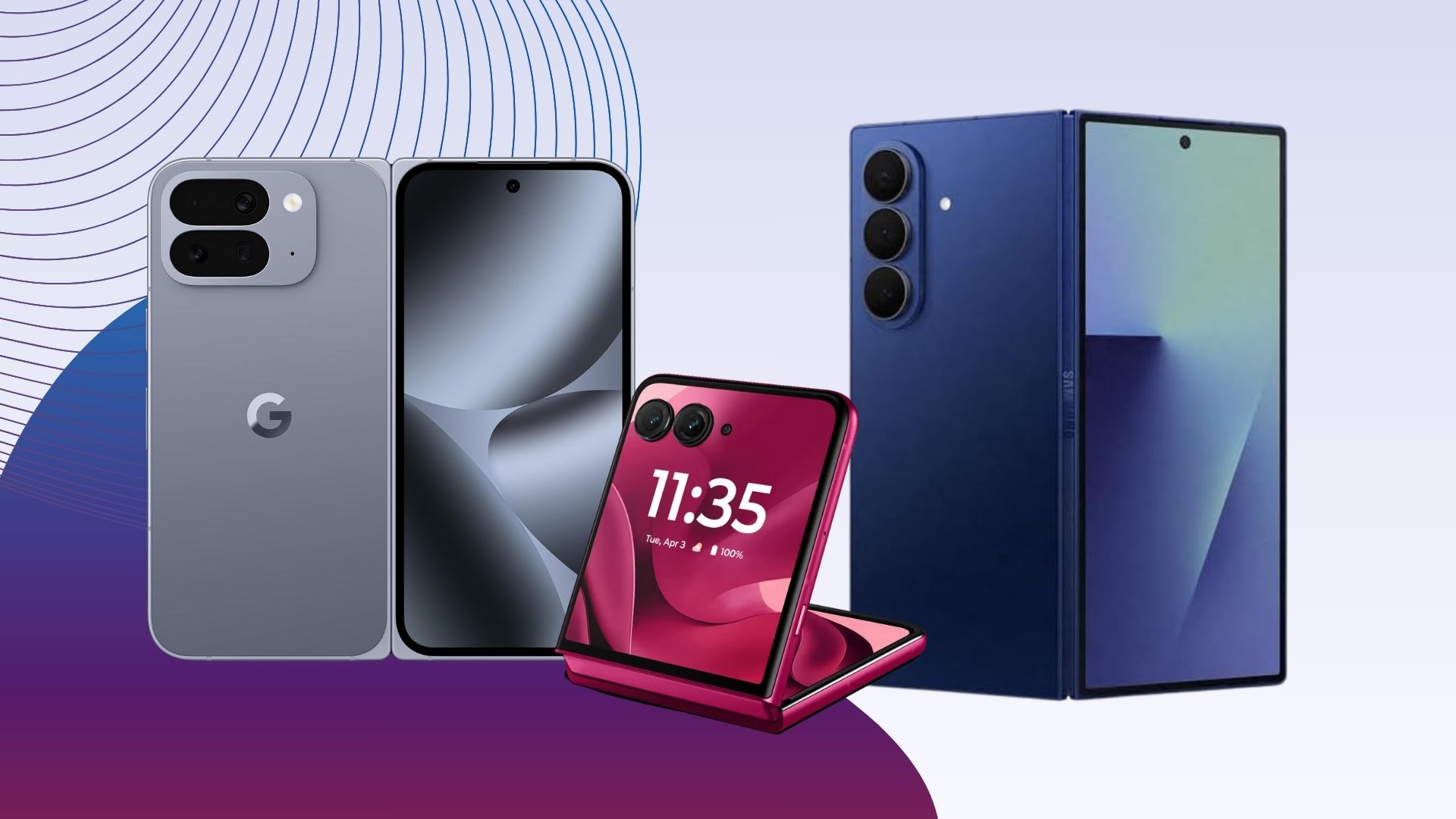
Foldable smartphones have gone from strength to strength in the past couple of years; these once-chunky, fragile devices are now slimmer, more robust and more capable, and that means they’re more tempting than ever.
The question is, which foldable should you buy? While there was initially a limited number of foldable available, that number has greatly expanded in the past 12 months. Whether you’re looking for the slimmest book-style foldable around, a compact clamshell-style foldable that fits in the palm of your hand or something that helps you multitask on the go, there’s a foldable for your needs.
Generally, it’s worth keeping in mind that foldable phones are still more fragile than regular smartphones with the flexible nature of foldable screens means that there is more potential for damage, but this could be a worthy trade-off depending on your needs.
In fact, durability issues and premium prices are the main reasons why we’ve yet to give any foldable the coveted five-star rating and remain key reasons to opt for a traditional flagship – though a couple of foldable entries have come closer than ever, suggesting that foldables are slowly but surely closing the gap.
You can see a selection of some of the most impressive regular phones we’ve tested in our best iPhone, best Android phone and best smartphone guides for context.
However, if that doesn’t put you off, keep reading. In this list, we’ve detailed the top-performing foldables we’ve tried and tested.
Best foldable phones at a glance
SQUIRREL_ANCHOR_LIST
Learn more about how we test phones
All the phones included in our Best foldable phone list have been thoroughly tested and used by one of our expert reviewers.
We don’t review phones based purely on benchmark scores or marketing hype. We use them as our everyday device for the review period, which is usually at least five days but can often be much longer if the device requires it.
Whenever you read a phone review published on Trusted Reviews, you should be confident that the reviewer has put their personal SIM card into the phone, synced across their most-used apps and logged into all their typical accounts. We do this so you’ll feel confident in our review and trust our verdict.
Our review process includes a mixture of real-world tests, more than 15 measured tests, and industry-standard benchmarks. We believe this gives the most rounded view of a device.
Pros
- Slimline design
- The foldable crease is almost imperceptible
- Much better camera hardware
- Strong battery life and rapid charging
Cons
- Camera sensors still trail behind bar phones
- Snapdragon chipset is underclocked
- Very limited availability
Pros
- Beautiful design and a compact, pocketable form
- Cover screen is arguably still the best out there
- Vibrant, bright, colour-rich photos from cameras
- Great battery life for a flip phone
Cons
- It’s very expensive for a phone of this type
- Main display feels narrow and cramped
- Aggressive battery management can interfere with notification promptness
Pros
- Lightest book-style foldable around
- Ultra thin design makes it really nice to use
- Larger, wider, wholly more useful screens
- Same main camera as Galaxy S25 Ultra
Cons
- Relatively small 4400mAh battery
- Slow 25W wired charging
- Zoom camera could be better for the price
Pros
- Larger cover screen is a much-needed improvement
- More convenient 21:9 ratio screen is much easier to use
- Improved camera performance
- Fast, flagship performance with strong battery life
Cons
- Cover screen software could be better
- Samsung software is full of duplicate/redundant apps
- No dedicated zoom camera
Pros
- Really solid, durable build for a foldable
- IP68 is the highest dust-water resistance in a folding phone
- Gorgeous, colour-rich displays with great stereo sound
Cons
- It’s big and heavy
- Underpowered compared to competitors
- Zoom and ultrawide cameras are underwhelming in lower light
Pros
- Bright displays
- Excellent cameras
- Proper two-day battery life
- Solid performance across the board
Cons
- MagicOS is still a letdown
Pros
- Luxurious tactile foldable design
- Lovely crease-light inner display
- Excellent battery life
Cons
- AI feels bloated
- Chipset feels underpowered
-
Slimline design
-
The foldable crease is almost imperceptible
-
Much better camera hardware
-
Strong battery life and rapid charging
-
Camera sensors still trail behind bar phones
-
Snapdragon chipset is underclocked
-
Very limited availability
If any foldable has actually cracked the formula, it’s the Oppo Find N6, and it manages to do so by sidestepping the two compromises that have long held this category back: a distracting crease and underwhelming battery life.
Unfold it and the 8.12-inch inner display is genuinely hard to fault. Look closely enough and there is a faint dip along the fold, but in normal use, you would never guess this was a folding phone, and that near-invisible crease makes the panel feel properly immersive, behaving more like a compact tablet than a phone that happens to fold.
Battery life impressed us too. The 6000mAh cell got through most days with charge to spare, and while heavier days might still call for a top-up, this is a meaningful step forward from earlier foldables we have tested.
The 200MP main camera pulls in detailed, well-balanced shots across a wide range of lighting conditions, and while the 50MP periscope and ultrawide do not quite match it for consistency, the overall setup gives you genuine flexibility.
Inside sits the Snapdragon 8 Elite Gen 5, though it runs a clipped seven-core configuration rather than the full eight. Benchmarks fall short of what we have seen from comparable slab phones, but day-to-day the Find N6 never felt slow.
The one real catch is availability. The Find N6 only launched in select markets, meaning most buyers will need to import it. If you want something you can walk into a shop and buy with full local support, the Samsung Galaxy Z Fold 7 remains the safer pick.
-
Beautiful design and a compact, pocketable form
-
Cover screen is arguably still the best out there
-
Vibrant, bright, colour-rich photos from cameras
-
Great battery life for a flip phone
-
It’s very expensive for a phone of this type
-
Main display feels narrow and cramped
-
Aggressive battery management can interfere with notification promptness
The Motorola Razr 70 Ultra is the strongest clamshell foldable you can buy right now, and it earns that title with a package that feels genuinely considered from top to bottom.
The first thing you notice is how good it feels to hold. The Pantone Orient Blue finish on our review unit has an almost velvety texture that looks as striking as it feels, though it does attract dust and lint, so you will either be wiping it down regularly or relying on the bundled case.
The curved edges, light weight and compact folded shape make this one of the most comfortable phones to carry and use for extended periods, without the finger fatigue that comes from the flat-sided slabs that dominate the market.
Open it up and the inner display is bright, fluid, thanks to a 165Hz refresh rate, and delivers punchy colours straight out of the box. It is a touch too tall and narrow for our liking, and Motorola could have gone wider here, but the real weak point is the plastic film over the panel, which reflects enough light to make outdoor reading a genuine struggle.
The cover screen is a highlight, handling full apps quickly and responsively, meaning you can get through plenty of quick tasks without ever needing to flip the phone open. It doubles up as a handy selfie mirror too.
Under the hood, the Snapdragon 8 Elite handles everything you throw at it without complaint, from demanding games to everyday multitasking. The 5000mAh battery comfortably stretches across a full day, which is a noticeable step up on what the Samsung Galaxy Z Flip 7 offers, and 68W charging gets you back to 50% in around 20 minutes.
SQUIRREL_PLAYLIST_10208532
-
Lightest book-style foldable around
-
Ultra thin design makes it really nice to use
-
Larger, wider, wholly more useful screens
-
Same main camera as Galaxy S25 Ultra
-
Relatively small 4400mAh battery
-
Slow 25W wired charging
-
Zoom camera could be better for the price
The Samsung Galaxy Z Fold 7 marks a genuine leap forward for Samsung’s book-style foldable, finally delivering the ultra-slim, lightweight design many have been waiting for.
Shedding much of the bulk and weight of its predecessors, the 4.2mm-thick Fold 7 is now among the thinnest foldables around, and at 215g, it’s both lighter than the book-style competition and even the Galaxy S25 Ultra. It makes it a joy to handle, and it’s almost unnoticeable in the pocket as a result.
Samsung has also nailed the usability of both displays this year. The wider 6.5-inch cover screen is genuinely practical for everyday tasks, while the 8-inch internal panel feels more solid with a way less intrusive crease. Both screens are bright, vibrant and ideal for everything from gaming to multitasking.
Camera performance is another highlight, with the main 200MP sensor borrowed from the S25 Ultra delivering sharp, detailed shots that put the Fold 7 on par with regular bar phones. General performance is equally impressive, thanks to the Snapdragon 8 Elite and up to 16GB of RAM.
Battery life and charging remain the main drawbacks with a 4400mAh cell and 25W charging falling far behind rivals. Still, for most users, the Fold 7 will comfortably last a day, and the overall package is compelling enough to make it the standout book-style foldable of 2025.
SQUIRREL_PLAYLIST_10207783
-
Larger cover screen is a much-needed improvement
-
More convenient 21:9 ratio screen is much easier to use
-
Improved camera performance
-
Fast, flagship performance with strong battery life
-
Cover screen software could be better
-
Samsung software is full of duplicate/redundant apps
-
No dedicated zoom camera
The Samsung Galaxy Z Flip 7 takes the crown for the best design in the foldable space, with a slimmer, lighter build and a hinge that feels both robust and satisfyingly smooth.
The new 4.1-inch cover screen finally makes the Flip genuinely useful when closed, and the wider 6.9-inch internal screen is a joy to use, with a less noticeable crease and a more comfortable aspect ratio for typing and media.
Powered by the Exynos 2500, the Flip 7 delivers fast, reliable performance for everyday tasks, and the 4300mAh battery is the biggest yet in a Flip, easily lasting a full day as a result.
Camera performance has also been improved, with more natural colours and solid results in most conditions, though the lack of a zoom lens remains a limitation.
The software, meanwhile, is packed with features and offers seven years of updates, but the cover screen experience still trails behind Motorola’s Razr 60 Ultra in terms of flexibility and ease of use.
Still, if you want a foldable that nails the basics and looks fantastic doing it, the Z Flip 7 is a great choice.
SQUIRREL_PLAYLIST_10207784
-
Really solid, durable build for a foldable
-
IP68 is the highest dust-water resistance in a folding phone
-
Gorgeous, colour-rich displays with great stereo sound
-
It’s big and heavy
-
Underpowered compared to competitors
-
Zoom and ultrawide cameras are underwhelming in lower light
If you want a foldable but are concerned about its durability, then the Pixel 10 Pro Fold is an easy recommendation. Not only does it sport a thick frame that feels reassuringly sturdy in hand, but it’s the first foldable with an IP68 rating.
In addition, the Pixel 10 Pro Fold benefits from a new dual-layer protection over the display and a redesigned hinge which, according to Google, can handle up to 10 years’worth of folding and unfolding.
Otherwise, its 6.4-inch OLED cover display is brilliant for quick uses, thanks to its convenient aspect ratio that makes quickly replying to messages, following a route on Google Maps or operating the camera easy without needing you to open the phone up.
Even so, the main draw is undoubtedly the eight-inch square OLED panel which is great to use and offers a vibrant picture quality. Sure, you will have to overlook the visible crease, but it’s still a great display for streaming, gaming and multitasking between apps too.
The Pixel series has a reputation for being among the best camera phones, and although the Pixel 10 Pro Fold might not be as impressive as the Pixel 10 Pro XL, it still performs admirably. While its 48MP main lens is supported by measly 10.8MP telephoto and 10.5MP ultrawide lenses, the 10 Pro Fold can still take a good shot in most conditions.
Powering the Pixel 10 Pro Fold is Google’s Tensor G5 chip, which although doesn’t achieve particularly high benchmarking scores, still performs well in everyday use – and especially when running Google’s AI toolkit. In fact, arguably one of the reasons to opt for the Pixel 10 Pro Fold is its range of AI features from Magic Editor and Camera Coach for photography, to Live Translate and the use of Gemini.
Like the rest of the Pixel 10 series, the Pixel 10 Pro Fold’s battery life is decent enough as it should comfortably see you through a day’s use. Charging speeds aren’t particularly fast, with 30W support, but it’s enough to see a 50% charge in about 30 minutes.
If you want to finally embrace a foldable smartphone but worry about its longevity, then the Google Pixel 10 Pro Fold is a brilliant choice.
SQUIRREL_PLAYLIST_10207883
-
Bright displays
-
Excellent cameras
-
Proper two-day battery life
-
Solid performance across the board
-
MagicOS is still a letdown
Building upon the already excellent foundations of the Honor Magic V3, the V5 doesn’t just take Honor’s foldable range to a new level, it elevates the market as a whole to show just how far the engineering in this sector has come. This is the phone that other foldables will be emulating for quite some time to come.
The biggest boon with the Magic V5 is just how sleek the whole thing is. With the slimmest version being just 8.8mm thick and weighing only 217g, it honestly doesn’t feel like you’re carrying a foldable phone as it’s barely that much bigger than a standard candy-bar style phone. That lightweight frame also makes it easy to use when unfolded, as it never leads to fatigue of holding the device as you enjoy the benefits of the larger display.
Speaking of displays, while the outer display is near identical to the one from the V3, the interior 7.95-inch panel has been given a serious spec boost to pack the same 5000 nits peak brightness as the outer display. This degree of parity between the two screens now means that you’re getting a top-shelf experience regardless of which one you’re looking at.
Also helping the phone to stand out against its closest competitors is the use of the super fast Snapdragon 8 Elite chipset which doesn’t just allow the device to blitz through tasks such as writing up emails or scrolling through social media – it also enables a superior gaming experience too. We were able to get through a couple of rounds of Call of Duty Mobile running with impressive levels of performance, which is only made all the more immersive when you play on the larger display.
Maybe what is most perplexing about the Honor Magic V5 is that, in spite of its super slim frame and all of the tech that’s been crammed in here from the flagship level chipset to the versatile camera array, it still manages to bring the heat where battery life is concerned. With a massive 5820mAh cell that uses silicon carbon technology, the Magic V5 can last for up to two days at a time, so you never have to worry about serious battery drain when running intensive apps.
-
Luxurious tactile foldable design
-
Lovely crease-light inner display
-
Excellent battery life
-
AI feels bloated
-
Chipset feels underpowered
Motorola’s Razr Fold is the company’s first attempt at a book-style foldable, and while it doesn’t quite reach the heights of the Google Pixel 10 Pro Fold or the Oppo Find N6, the overall package is still seriously impressive.
This is one of the better-looking book-style foldables you can buy right now, particularly in Lily White, which features a silky satin texture on the back that feels like premium faux leather. A Blackened Blue version with a fabric-style finish is also available if that’s more your thing.
Unlike most rivals in this category, the crease on the 8.1-inch inner screen is barely noticeable. It delivers punchy colours, deep blacks and a smooth 120Hz LTPO refresh rate that makes it a genuine treat for media and gaming.
The 6.6-inch cover screen is arguably the bigger highlight, boasting a near-perfect 6000 nits peak brightness and an even faster 165Hz LTPO refresh rate than the inner panel.
Performance is plenty strong. The Snapdragon 8 Elite Gen 5 chipset sits alongside 16GB of RAM and 512GB of storage, making light work of multitasking across multiple windows and handling demanding games without complaint.
Where things get a little complicated is the software side. Motorola’s AI approach has become overcrowded, bundling its own Moto AI assistant alongside Gemini, Perplexity and CoPilot. Having four separate LLMs accessible through a single interface ends up feeling more chaotic than useful.
There’s also a performance caveat worth flagging: the chipset in the Razr Fold does not appear to be running at full power, meaning the Oppo Find N6 still edges ahead across most CPU, GPU and AI benchmarks.
Battery life is one of the Razr Fold’s strongest suits, with a 6000mAh silicon-carbon cell comfortably lasting a full day even when the larger inner screen is doing most of the heavy lifting.
SQUIRREL_PLAYLIST_10208584
FAQs
Apple hasn’t released or announced any intention to make a foldable phone yet, however rumours swirl that we’ll see a big play for this category from the Cupertino company in the coming years. For now, all the best foldable phones run on Android.
Test Data
| Oppo Find N6 | Motorola Razr 70 Ultra | Samsung Galaxy Z Fold 7 | Samsung Galaxy Z Flip 7 | Google Pixel 10 Pro Fold | Honor Magic V5 | Motorola Razr Fold | |
|---|---|---|---|---|---|---|---|
| Geekbench 6 single core | 3571 | 2872 | 2318 | 2251 | 2317 | 1151 | 2620 |
| Geekbench 6 multi core | 9677 | 8725 | 8828 | 7584 | 6251 | 4818 | 9348 |
| Geekbench 6 GPU | 23961 | 19315 | – | – | – | – | 17196 |
| 3DMark Solar Bay | 46.9 | 43.5 | – | – | – | – | 35.1 |
| AI performance | – | 3643 | – | – | – | – | 4154 |
| 1 hour video playback (Netflix, HDR) | – | – | 8 % | 7 % | 7 % | – | – |
| 30 minute gaming (light) | – | – | 7 % | 6 % | 5 % | – | – |
| Time from 0-100% charge | 50 min | 51 min | 87 min | 89 min | – | 70 min | 50 min |
| Time from 0-50% charge | 17 Min | 20 Min | 31 Min | 28 Min | – | 30 Min | 18 Min |
| 30-min recharge (included charger) | 81 % | – | – | – | – | – | – |
| 15-min recharge (included charger) | 44 % | – | – | – | – | – | – |
| 30-min recharge (no charger included) | – | 71 % | 49 % | 54 % | – | 50 % | 77 % |
| 15-min recharge (no charger included) | – | 40 % | 24 % | 29 % | – | 29 % | 42 % |
| 3D Mark – Wild Life | 6398 | 6238 | 5574 | 4896 | 3328 | – | 5374 |
| 3D Mark – Wild Life Stress Test | 53.6 % | – | – | – | – | – | 77.5 % |
| GFXBench – Aztec Ruins | – | – | 70 fps | 109 fps | 49 fps | 60 fps | – |
| GFXBench – Car Chase | – | – | 71 fps | 107 fps | 52 fps | 74 fps | – |
Full Specs
| Oppo Find N6 Review | Motorola Razr 70 Ultra Review | Samsung Galaxy Z Fold 7 Review | Samsung Galaxy Z Flip 7 Review | Google Pixel 10 Pro Fold Review | Honor Magic V5 Review | Motorola Razr Fold Review | |
|---|---|---|---|---|---|---|---|
| UK RRP | – | £1199 | £1799 | £1049 | £1749 | £1699.99 | £1799 |
| USA RRP | – | $1499 | $1999 | $1099 | $1799 | – | $1899 |
| Manufacturer | Oppo | Motorola | Samsung | Samsung | Honor | Motorola | |
| Screen Size | 8.12 inches | 7 inches | 8 inches | 6.9 inches | 8 inches | – | 8.1 inches |
| Storage Capacity | 512GB | 512GB | 256GB, 512GB, 1TB | 256GB, 512GB | 256GB, 512GB, 1TB | 512GB | 512GB |
| Rear Camera | 200MP + 50MP + 50MP | 50MP + 50MP | 200MP + 12MP + 10MP | 50MP + 12MP | 48MP + 10.8MP + 10.5MP | 50MP wide, 64MP telephoto, 50MP ultra-wide | 50MP + 50MP + 50MP |
| Front Camera | 20MP + 20MP | 50MP | 10MP + 10MP | 10MP | 10MP | Dual 20MP cameras | 32MP |
| Video Recording | – | Yes | Yes | Yes | Yes | Yes | Yes |
| IP rating | IP57 | Not Disclosed | Not Disclosed | Not Disclosed | IP68 | IP57 | Not Disclosed |
| Battery | 6000 mAh | 5000 mAh | 4400 mAh | 4300 mAh | 5015 mAh | 5820 mAh | 6000 mAh |
| Wireless charging | Yes | Yes | Yes | – | Yes | Yes | Yes |
| Fast Charging | Yes | Yes | Yes | Yes | Yes | Yes | Yes |
| Size (Dimensions) | 145.6 x 4.2 x 159.9 MM | 74 x 7.2 x 171.5 MM | 143.2 x 4.2 x 158.4 MM | 75.2 x 6.5 x 166.7 MM | 150.4 x 5.2 x 155.2 MM | 74.3 x 8.8 x 156.8 MM | 144.5 x 4.7 x 160.1 MM |
| Weight | 225 G | 199 G | 215 G | 188 G | 258 G | 217 G | 243 G |
| Operating System | ColorOS 16 (Android 16) | Android 16 | OneUI 8 (Android 16) | OneUI 8 (Android 16) | Android 16 (Material 3 Expressive) | MagicOS | – |
| Release Date | 2026 | 2026 | 2025 | 2025 | 2025 | 2025 | 2026 |
| First Reviewed Date | 17/03/2026 | 18/05/2026 | 17/07/2025 | 09/07/2025 | 08/10/2025 | 28/08/2025 | 04/06/2026 |
| Resolution | 2480 x 2248 | 1224 x 2992 | 2184 x 1968 | 2640 x 1080 | 2076 x 2152 | x | 2232 x 2484 |
| HDR | Yes | Yes | Yes | Yes | Yes | Yes | Yes |
| Refresh Rate | 120 Hz | 165 Hz | 120 Hz | 120 Hz | 120 Hz | 120 Hz | 120 Hz |
| Ports | USB-C | USB-C | USB-C | USB-C | USB-C | USB-C | USB-C |
| Chipset | Snapdragon 8 Elite Gen 5 (Seven-core) | Snapdragon 8 Elite | Qualcomm Snapdragon 8 Elite for Galaxy | Samsung Exynos 2500 | Google Tensor G5 | Snapdragon 8 Elite | Snapdragon 8 Elite Gen 5 |
| RAM | 16GB | 16GB | 12GB, 16GB | 12GB | 16GB | 16GB | 16GB |
| Colours | Orange, Grey | – | Blue Shadow, Silver Shadow, Jet-black, Mint | Blue Shadow, Jet Black, Coral Red, Mint | Moonstone, Jade | Black, Ivory White, Dawn Gold, Reddish Brown | Blackened Blue, Lily White |
| Stated Power | 80 W | 68 W | 25 W | – | 30 W | – | 80 W |


