





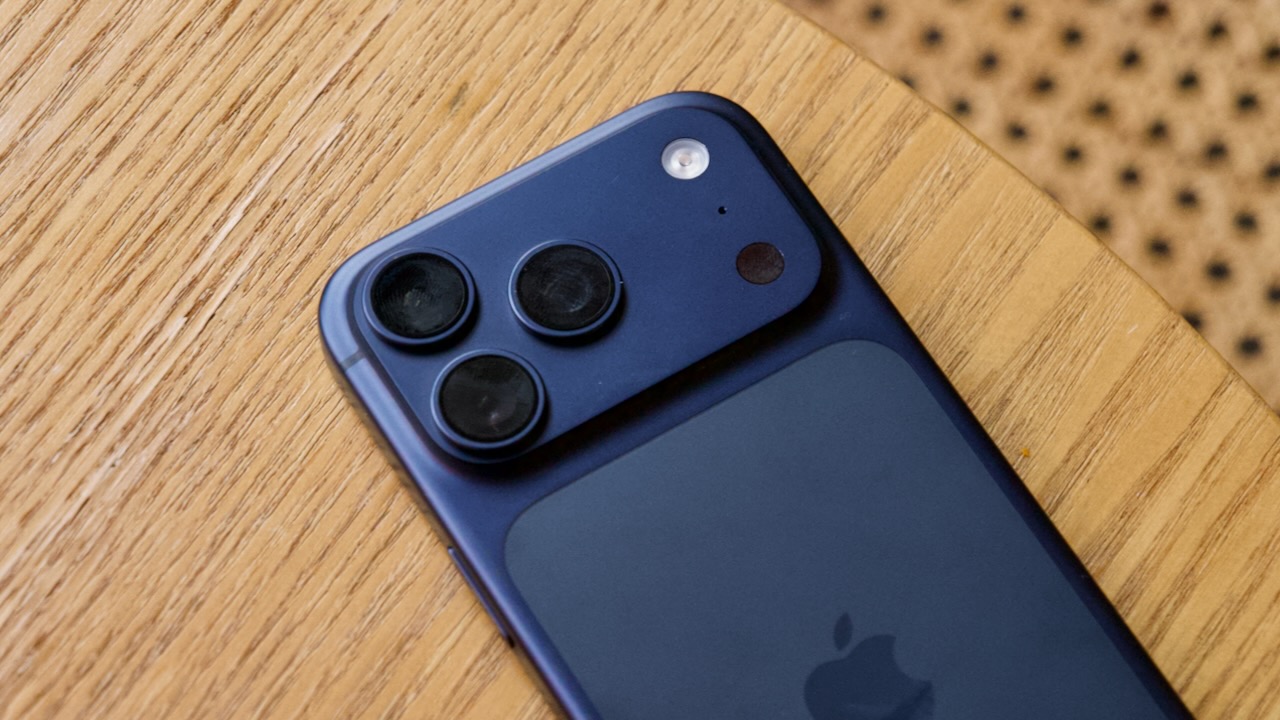
iPhone owners will tell me until they go blue in the face that the iPhone has the best camera hardware of any smartphone – at which point, I usually get the Oppo Find X9 Ultra out of my pocket and show them what a real camera phone can do.
I genuinely think iPhone users still assume Android cameras are the same as they were 10 years ago, when Apple really did have a steady lead, but in 2026 that’s not the case.
In fact, I’d argue that the Android competition has not just caught up to Apple but has surpassed it in recent years, with some of the best camera phones around in 2026 giving the iPhone 17 Pro a run for its cash in many areas, from low-light performance to zoom capabilities.
It’s for this reason (and the fact I review way more Androids than iPhones) that I tend to gravitate more towards Androids than iPhones – but if the most recent iPhone 18 Pro rumours are on the money, that might change later this year.
iPhone cameras are great, but they’re not the best
Now I’m not going to say that the iPhone 17 Pro has bad cameras – far from it. The latest top-end iPhone doesn’t tend to disappoint that often in general point-and-shoot snaps, whether that’s a photo of my dog, a nice sunset vista or a cheeky portrait-style selfie – I just don’t think it’s the best camera phone around.
There have been plenty of times when I’ve been out and about with only the iPhone 17 Pro in my pocket when I’ve seen something cool. As a member of the digital generation, I obviously want to take a little snap of it to share with friends and possibly upload to social media (to get a total of zero likes, of course).
The problem is that, unless I’m right in front of what I want to capture, the iPhone 17 Pro doesn’t really give me what I want. Shots from the main camera are sharp, and the 4x telephoto does a great job at closing the distance, but if I’m trying to take a shot of a group of deer that are easily startled, 4x doesn’t do the job. Crank it up to the 10-15x mark, and it goes from sharp and detailed to something more heavily processed.
Even in what I’d describe as ideal lighting scenarios, the iPhone can sometimes get the colour temperature wrong or, with the zoom lens, introduce noticeable noise – even at as little as 8x.
I also find that iPhones don’t have the true DSLR-like bokeh in close-up shots, often relying more on software enhancements. As someone who uses phones to take photos of other phones for review purposes, that’s a pretty big deal for me. Shots I take on my iPhone can sometimes lack that depth that makes a photo look truly pro-level.
As such, I tend to gravitate towards Android phones like the Samsung Galaxy S26 Ultra, Xiaomi 17 Ultra and, more recently, Oppo’s Find X9 Ultra for most of my photography needs. The combination of larger sensors, better zoom capabilities, and some top-notch tuning means that the X9 Ultra very rarely misses the mark, consistently delivering shots I’d describe as DSLR-level.
Case in point; practically every review I’ve published since early April uses photos taken by the Find X9 Ultra. Has a single person suggested that these might be taken on a phone? Absolutely not. I mean, just take a look at some of these product shots:
Could the iPhone 17 Pro match some of these shots? Yes. But would it be much harder to achieve? You bet.
The iPhone 18 Pro might finally change that
However, the most recent rumblings on the grapevine suggest that could all change with the release of the iPhone 18 Pro later this year.
Bloomberg’s Mark Gurman, who I can only assume can turn invisible and wander freely at Apple Park given the accuracy of his rumours, claims that the iPhone 18 Pro will offer some of the most significant camera upgrades in quite some time – and considering we’ve not exactly been starved of pretty decent camera upgrades in recent years, that has piqued my interest.


The key upgrade here is a main camera upgrade with a variable aperture, something present on some high-end Android camera phones but something Apple phones have always lacked. It has been rumoured for years, but it sounds like it could finally be coming this year, though there’s still much we don’t know.
What will the variable aperture be used for, exactly? It differs on the Android side of things from manufacturer to manufacturer; some use it to adjust the focus and depth of field, others use it for better portrait photography, while others lean on a wider aperture for better low-light shots.
Maybe Apple will use it for all of the above – who knows – but it sounds like it’ll be a tasty upgrade for this year’s Pro iPhone.
It’s also said to offer a wider aperture for the 4x telephoto camera, which should bolster its performance in low-light conditions by slurping in way more light than the current zoom lens’ f/2.8 can offer – a key weakness of the zoom lens.

Specifics around the exact aperture size are unknown, but I’m hoping that it’ll close the gap between Apple’s hardware and the likes of the X9 Ultra’s f/2.2 on its zoom lens.
Separate reports also claim that the Camera app will get access to more advanced camera controls, which would track with the ability to adjust the aperture of the main lens. We’ve already seen Apple showcase a revamped Camera app coming to iOS 27 at WWDC, with a focus on customisation, but it hasn’t said anything about new, advanced controls just yet.
Best to temper expectations for now, though
As always with rumours, it’s best to take these rumours with a big ol’ pinch of salt – the variable aperture, for example, has been rumoured for years at this point, with every leaker claiming that it’ll be on the next iPhone – until it isn’t.
Granted, Mark Gurman has a much better track record than most when it comes to Apple leaks, but he’s still not infallible, and it’s also possible that there could be last-minute changes to the hardware ahead of its first manufacturing run.
As always, we won’t know what the iPhone 18 Pro will offer until Apple’s upcoming CEO, John Turnus, reveals it on stage later this year, but if the rumours are true, it could finally be the year that the iPhone regains its status as my daily driver. Let’s see.


