

Just months ago, a complete thaw in India-Bangladesh relations appeared possible. After the turbulence that followed Sheikh Hasina’s fall from power in 2024 in an uprising, the election that put a new Prime Minister—Tarique Rahman—in power seemed to offer both countries an opportunity to reset a relationship that had become burdened by mistrust and political baggage.
Dhaka signalled its intent early. The new government avoided inflammatory rhetoric, pursued dialogue and largely resisted domestic pressure for a tougher line against India. India, too, showed its intention of toning down its hostile attitude towards post-Hasina Bangladesh and issued statements which showed its attempt at resetting ties.
However, a succession of incidents over the recent weeks has reinforced a growing perception in Bangladesh that New Delhi wants the benefits of improved ties without altering the policies that caused relations to deteriorate in the first place. The result is a diplomatic chill that threatens to squander one of South Asia’s most important strategic relationships.
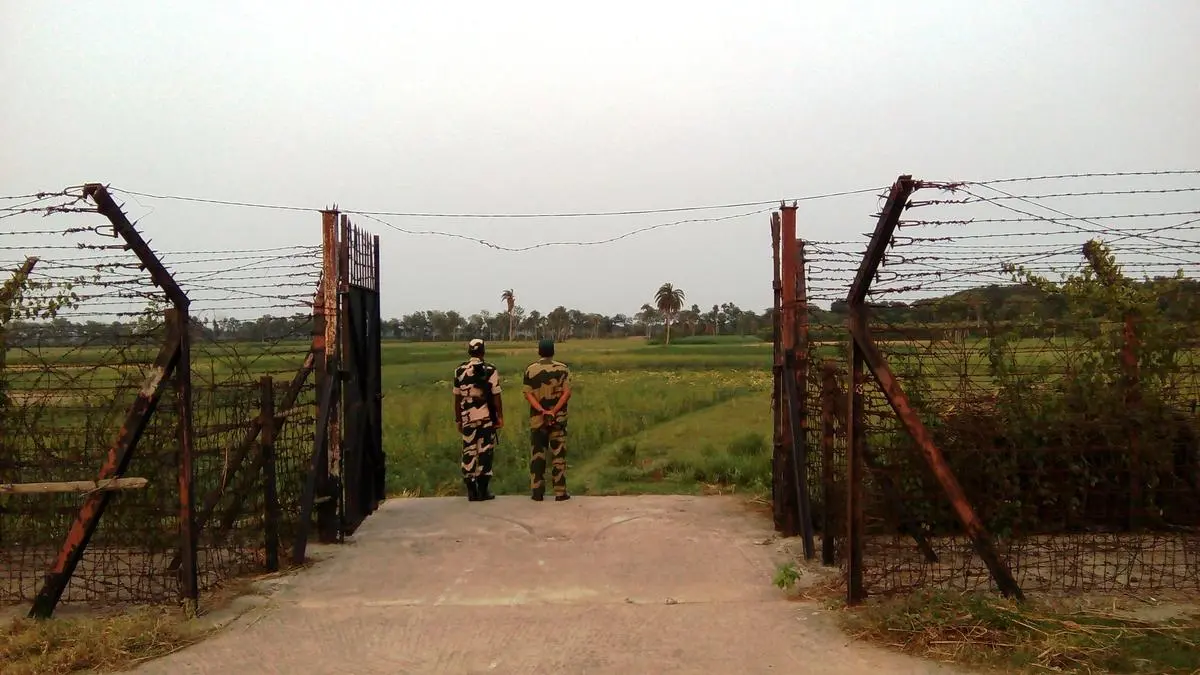
At the centre of the latest tensions is India’s practice of “push-ins”, or the alleged transfer of suspected undocumented migrants across the Bangladesh border without following formal repatriation procedures. What New Delhi sees as an immigration issue, Dhaka increasingly sees as a sovereignty issue.
Human Rights Watch released a report this week accusing Indian authorities of unlawfully expelling ethnic Bengali residents, many of them Muslims from West Bengal, into Bangladesh. The rights group alleged that some of those targeted were Indian citizens or long-term residents and had been denied due process before being removed.
Others reportedly found themselves stranded in the no-man’s land between the two countries after Bangladesh refused to accept them.
For Bangladesh, the implications extend well beyond border management. No government can quietly accept individuals whom another country unilaterally declares to be its nationals. Every push-in effectively asks Dhaka to absorb responsibility for people whose identities and citizenship remain contested.
In doing so, India risks transforming an administrative matter into a diplomatic grievance.
The issue is particularly sensitive because it touches a long-standing Bangladeshi complaint about asymmetry in the bilateral relationship. Successive governments in Dhaka have often felt that India approaches Bangladesh primarily through a security lens—as a border to be managed rather than a partner to be consulted with. The push-ins reinforce precisely that perception. The timing has made the damage worse.
The airport moment
Just as both governments were attempting to stabilise relations, India found itself embroiled in another controversy involving Zahed ur Rahman, an adviser to Prime Minister Tarique Rahman. Upon arriving in Delhi for an international conference on June 15, he was made to wait for two hours by immigration officials before eventually being allowed entry.

Zahed Ur Rahman, Information and Broadcasting Adviser to Bangladesh Prime Minister Tarique Rahman, who abandoned his Delhi visit and returned to Dhaka after Indian immigration officials held him for two hours at Indira Gandhi International Airport on June 15.
| Photo Credit:
By Special Arrangement
By then, the damage was done. Rahman abandoned his trip and returned home. Bangladesh lodged a formal protest.
Diplomacy often turns on symbolism. In isolation, the incident may have been bureaucratic incompetence. In context, it appeared to many Bangladeshis as another reminder that their country’s sensitivities are treated as an afterthought in New Delhi.
The broader political backdrop is impossible to ignore. The BJP’s victory in West Bengal has strengthened incentives to maintain a hard line on migration and border security. Few issues resonate more strongly in the State’s politics than illegal immigration. Demonstrating toughness on the border may yield domestic political dividends. But it also comes with diplomatic costs.
That contradiction increasingly defines India’s Bangladesh policy. Officially, New Delhi speaks of rebuilding trust and strengthening regional cooperation. In practice, many of its recent actions send the opposite message.
This matters because Dhaka has, thus far, chosen restraint. After the interim government led by Muhammad Yunus took office, following Hasina’s ouster, Bangladesh invested in what might be called soft diplomacy. The returns had been meagre.
Sheikh Hasina still remains in India despite repeated requests from Bangladesh. Border killings and, of late, push-ins continue to inflame public opinion. For many in Dhaka, the conclusion is becoming harder to avoid that the relationship, after all, is not improving.
That sentiment carries risks. Public attitudes towards India have shifted markedly since 2024. National sovereignty and dignity have become potent political themes. Every incident strengthens those arguing that Bangladesh has little to gain from India despite all its intent.
The irony is that neither side can afford a prolonged deterioration. Geography alone makes cooperation unavoidable. India needs a stable Bangladesh for regional connectivity, security and access to its north-eastern region. Bangladesh benefits from trade, transit and economic integration with India. Neither country’s interests are served by a return to mutual suspicion.
Yet successful diplomacy depends on reciprocity. Goodwill cannot survive indefinitely if it appears one-sided. Bangladesh’s new government has wagered that restraint would create political space for a reset. India’s recent actions suggest New Delhi has yet to make the same calculation.
That is the real significance of the current dispute. The problem is not merely the push-ins, nor the airport incident involving Zahed ur Rahman. It is the cumulative impression they create. At precisely the moment when relations showed tentative signs of recovery, India appears to be undermining the reset it claims to want.
If that perception hardens in Dhaka, the diplomatic frost now settling over the relationship may prove harder to reverse than either side expects.
Faisal Mahmud is a Dhaka-based journalist.
Also Read | Himanta, Suvendu, and the remaking of India’s eastern border
Also Read | Bangladesh’s moment of reckoning
