


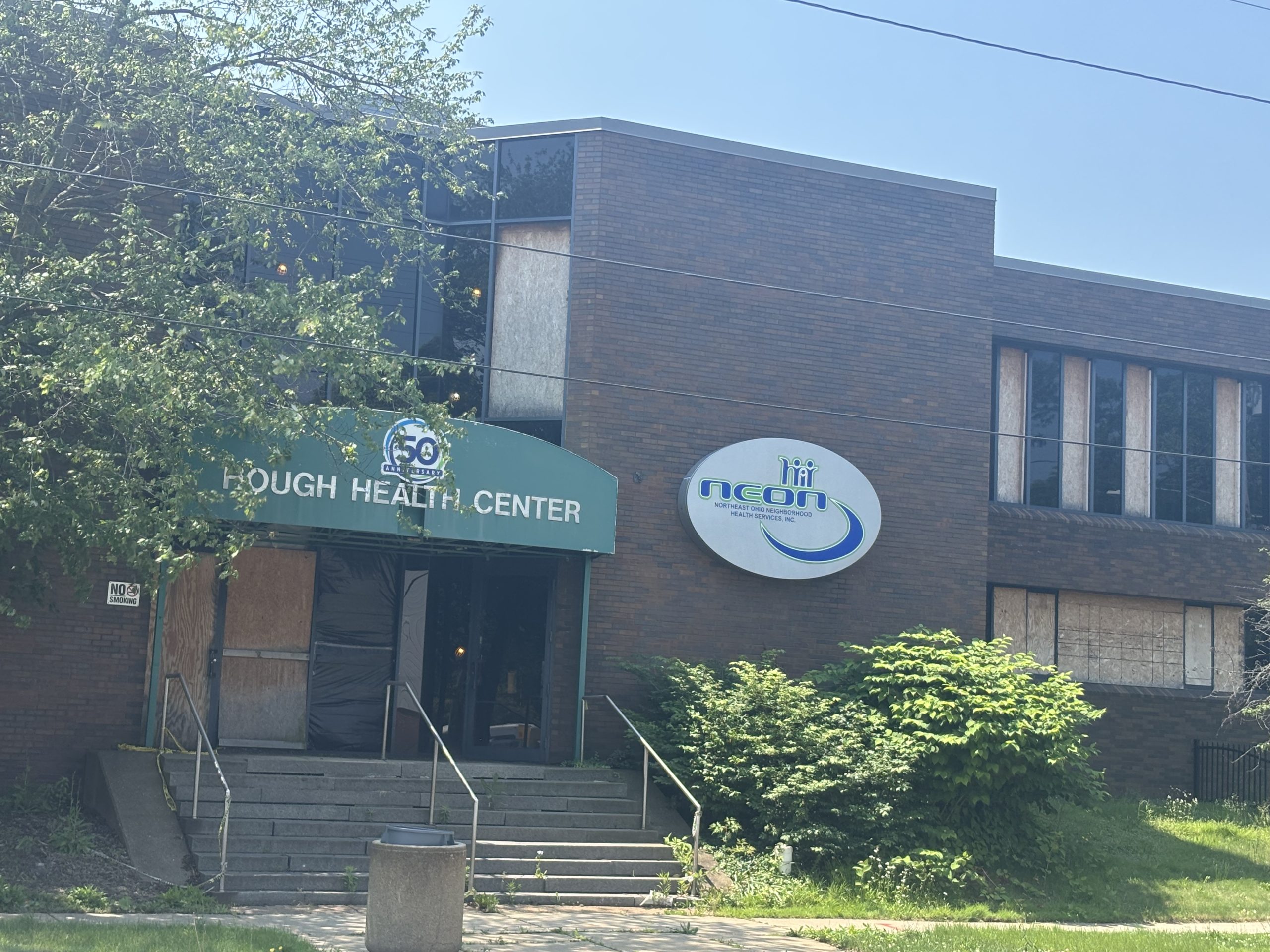
The future of a storied East Side health center remains in question as it continues to fight a lender seeking to take its properties and other assets.
Northeast Ohio Neighborhood Health Services (NEON), which has served patients on Cleveland’s East Side for nearly 60 years, operates six clinics and a mobile health unit. As a federally qualified nonprofit health clinic, it serves patients regardless of insurance status and offers reduced-cost care.
That legacy is at risk. In February, New Jersey-based lender, All Pro Capital, asked a U.S. District Court judge for permission to foreclose on NEON’s properties in order to recoup the millions of dollars the health center owes. (As of February, All Pro told the court NEON owed $9.5 million, a balance that will increase as interest accrues.)
After months of delaying its response in court, this week NEON asked the judge to deny All Pro’s request, accusing the lender of “fraudulently” transferring about $4.2 million out of a bank account that the two parties shared. The lender took the funds after NEON stopped making payments on its loan.
By taking that money, All Pro broke the contract it had with NEON and therefore shouldn’t be able to take its properties, the health center wrote in the filing. The two parties are near to reaching a resolution for how the health center can pay back its debts, NEON said. Allowing foreclosure would undo those efforts “and lead to a far less desirable outcome,” NEON added.
A lawyer for All Pro Capital did not provide a statement in response to the filing but said it would respond in court. It previously argued that taking the funds from NEON was its right under the agreement the two parties signed.
The judge must now decide whether to grant All Pro Capital the ability to foreclose on NEON or seek more facts in the case.
The lawsuit, which has placed NEON in the public spotlight, has now dragged on for over a year. All Pro Capital first filed suit last June when it asked a judge to put NEON into a receivership, which would have the power to run the nonprofit’s finances and sell its properties. The two parties negotiated for months before the lender told the judge it wanted foreclosure because NEON was “not even reasonably close” to being able to pay back its debt.
Why the health center is accusing its lender of fraud
NEON’s argument largely centers around complicated bankruptcy rules about how to repay multiple creditors when an organization doesn’t have enough money to do so.
The health center’s finances took a dive after a 2021 fire that destroyed the Hough Health Center, which it described as its most “profitable” site. The organization “failed to receive” full insurance payments for the fire, it wrote. Then, a cyberattack restricted its ability to provide services and collect payments, it wrote in the filing.
After that, NEON negotiated an $11 million loan with All Pro Capital to help stay afloat. The terms were not favorable to NEON, the organization wrote in its filing, saying the company charged them extensive fees and increased interest rates over time. NEON said the nonprofit was “inevitably” unable to pay the loan back on time.
When All Pro Capital took money from the shared bank account, NEON was insolvent or close to it, the nonprofit said in its filing. That means the sum of all its debts was more than all of its assets. And NEON had more debts to repay than just to All Pro Capital: three other groups have also filed suits against NEON seeking money owed, as have employees who are missing paychecks.
By taking the dollars from the bank account, NEON argued that All Pro unfairly took money that other debtors also could’ve received, “otherwise known as a fraudulent and preferential transfer.”